
- Home
- Companies
- Ecological Laboratories, Inc. (ELI)
- Articles
- Field Results for Aquaculture ...
Field Results for Aquaculture Application - Case Study
Background:
Aquaculture systems often struggle with the overstocking of farms and the creation of excess waste. This population growth problem causes the animals to be stressed and more susceptible to diseases. A high concentration of waste in the water will also increase biochemical oxygen demand (BOD) and drop dissolved oxygen (DO) that negatively impacts shrimp and fish. Bacteria are an integral part of all aquaculture ponds and have a direct impact on productivity, nutrients, water quality and disease control.
Prawn Field Results:
Aquaculture Treatment (AQT) is a biologically active formula of ELI’s bacterial strains that were chosen because of their ability to rapidly digest excess waste material in shrimp ponds. This scientifically selected, proprietary blend of cultures colonize the animal gut to aid in feed digestion and help protect shrimp and fish against pathogens.
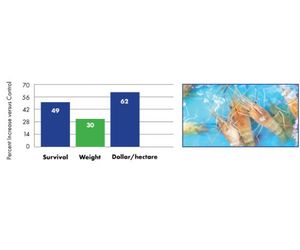
As shown in the chart above, using ELI’s AQT’s equates to an increase in survival and weight of the shrimp as well as a higher payback ratio.
ELI’s AQT cultures were chosen for optimum enzyme production, assuring efficient breakdown of proteins, carbohydrates, cellulose and fats. This leads to better feed conversion and less waste material for cleaner water and higher oxygen levels. Additionally, harmful ammonia and nitrates subside for healthier aquatic animals.