


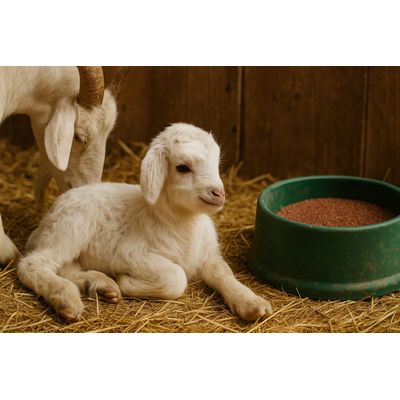
Goat Mineral Requirements During Kidding Season: What Producers Need to Know
Goat mineral nutrition during kidding season is a foundational element of reproductive performance and kid vitality. As does approach parturition and early lactation, precise mineral intake supports fetal development, colostrum quality, immune transfer, and rebreeding performance.
Why Kidding Season Matters
During the final trimester, approximately 70 percent of fetal growth occurs, and the doe’s nutrient demand rises sharply as she supports rapid fetal development while preparing for colostrum production and milk synthesis. While energy and protein are important, minerals are often the limiting factor in performance.
- Weak or low-vigor kids
- Increased incidence of retained placentas
- Poor colostrum quality
- Reduced milk production
- Delayed rebreeding
- Compromised immune response
Key Minerals That Drive Kidding Season Success
While goats require a full spectrum of macro and trace minerals, several are particularly critical during late gestation and early lactation.
Selenium
Selenium supports immune function and muscle development. Deficiency can contribute to white muscle disease, weak newborns, poor suckling response, and higher mortality. In selenium-deficient regions, supplementation is especially important to support birth strength and immune transfer through colostrum.
Copper
Copper is essential for fertility, immune resilience, hair coat quality, and enzyme function. Copper deficiency can impair reproductive performance and cause anemia or weak kids. Goats have a higher tolerance and requirement for copper than sheep, but a proper balance is critical to avoid toxicity. A species-specific mineral program helps meet needs without excess risk.
Zinc
Zinc supports hoof integrity, skin health, and immune response. Stress during kidding season elevates zinc needs to maintain resilience.
Calcium & Phosphorus
The balance of calcium and phosphorus becomes especially important in late gestation and lactation. Calcium supports fetal skeletal development and labor muscle contractions; inadequate levels contribute to metabolic disorders and reduced milk production.
Magnesium
Magnesium supports nerve and muscle function. Adequate dietary magnesium contributes to metabolic stability during periods of high demand, reducing risk of deficiencies.
Signs Mineral Requirements During Kidding Season Are Not Being Met
- Poor body condition despite adequate feed
- Increased kidding difficulty
- Higher rates of stillbirths
- Kids slow to stand or nurse
- Increased disease incidence
- Does that struggle to rebreed
Forage Alone Is Rarely Enough
Forage nutrient content varies with soil, rainfall, maturity, and fertilization, and even high-quality forage often falls short in trace minerals such as selenium, copper, and zinc. Antagonists in water or feed—such as iron, sulfur, and molybdenum—can interfere with mineral absorption, so intake alone may not translate to bioavailability. A balanced, bioavailable mineral supplement helps bridge these gaps.
That is the rationale for DuraFerm products designed for goats.
DuraFerm Can Help
Two DuraFerm options support reproductive success in goats. It is recommended to feed either option at least 30 days pre-kidding through 30 days post-breeding for best results, though maintaining a tailored mineral program optimizes herd health.
DuraFerm Concept•Aid Goat is a free-choice vitamin and mineral supplement designed to support reproductive success. It includes AO-Biotics Amaferm, a prebiotic shown to enhance digestibility, and high levels of vitamin E to support reproductive tract repair and embryo production. Available in 12- or 50-pound bags.
DuraFerm Concept•Aid Goat Protein Tub is a 50-pound protein tub with vitamins and minerals to support reproductive success. It contains Amaferm to enhance digestibility and provides 20% crude protein, with the Concept•Aid mineral package and elevated vitamin E to support embryo production and conception.
Mineral Nutrition & Kid Vigor
Birth vigor reflects maternal nutrition. Does receiving adequate minerals during late gestation are more likely to produce kids that stand quickly, nurse aggressively, maintain body temperature, and resist early-life disease challenges. Trace minerals enhance antibody production and passive transfer via colostrum, contributing to strong early-life immunity.
The Link Between Minerals & Rebreeding Success
Kidding season encompasses more than birth. Mineral status influences rebreeding performance: deficiencies can delay estrus return and reduce conception rates. Copper, selenium, and zinc play roles in hormone production and ovarian function, underscoring the importance of an effective mineral program for tight kidding windows and overall productivity.
Practical Steps to Improve Your Goat Mineral Program
- Evaluate your current mineral label to confirm it is formulated specifically for goats.
- Review copper and selenium levels in the context of regional soil deficiencies.
- Provide loose, free-choice mineral at multiple accessible locations.
- Protect minerals from moisture and contamination.
- Monitor intake to ensure goats consume recommended amounts.
- Consider forage and water testing to identify antagonists that may interfere with absorption.
The Bottom Line
Kidding season tests nutrition program strength; when does kid easily, produce vigorous offspring, and rebreed efficiently, nutrition has delivered. Understanding and proactively meeting goat mineral requirements during kidding season protects reproductive performance, kid survivability, and long-term herd productivity.
Minerals are foundational to herd performance, supporting the unseen physiological processes that determine whether a herd sustains or thrives.
Get your DuraFerm Today
Maintain goat mineral requirements during kidding season with DuraFerm Concept•Aid Goat products powered by AO-Biotics Amaferm. Purchase DuraFerm through the BioZyme dealer network. Learn more about DuraFerm through our educational blog series or by subscribing to our newsletter.
Original: https://biozymeinc.com/blog/goat-mineral-requirements-during-kidding-season/