


Beijing Eco-mind Technology Co., Ltd products
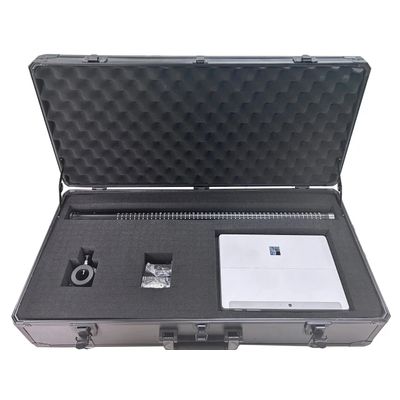
Eco-mind - Model LK-1300 - Root analyser for potted plants
LK-1300 Root analyser for potted plants is a potted plant root system developed by Beijing Eco-mind Technology Co, It can measure the length, area, number of root tips, diameter, distribution pattern, number of live and dead roots, etc. The instrument can be widely used for research and teaching in agronomy, biology, ecology, cultivation and horticulture.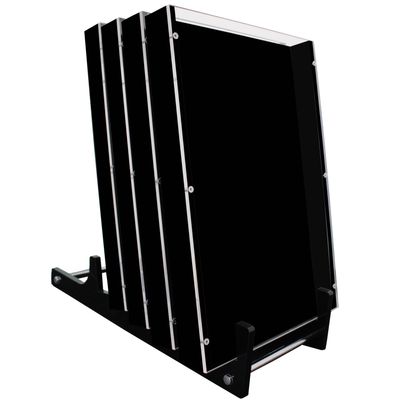
Eco-mind - Model LK-350 - plant root box
LK-350 plant root box is a feasible means to separate inter-root soil from non-root soil and to study soil pore water, root interaction,etc. Plants are planted in a transparent root box on one side and the root box is placed at an inclined angle on a fixed-angle stand. Plant roots are mainly distributed on the transparent root box panel dueto their weight, and combined with the LK-1250 plant root box imaging system, root growth and development can be continuously tracked and measured throughout the growth cycle of plants, and combined with professional image analysis software, root length, diameter, area At the same time, inter-root soil pore water sampler and inter-root soil irrigator can be used to extract inter-root soil solution at the back of the rootbox, and then study the interaction between plant roots and soil.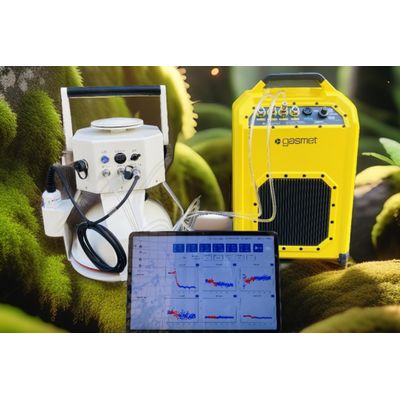
ECO-MIND - Model SFC-20 - Automatic Soil flux Chamber(GT5000 portable multi-parameter soil GHG flux system)
This is a complete solution, including analyzer, automatic chamber, environmental sensors and flux calculation software Unique wireless control mode, all data are collected wirelessly through a PAD, which greatly facilitates field operation; totally superior to other products on the market. The chamber can be automatically raised and lowered, perfectly matching the setting of the measurement program, no need to manual opening and closing. The rechargeable lithium battery is placed in the chamber which can also display the power status and meet the continuous use of 48 hours in the field.Plant Science - Minirhizotron Imaging Systems
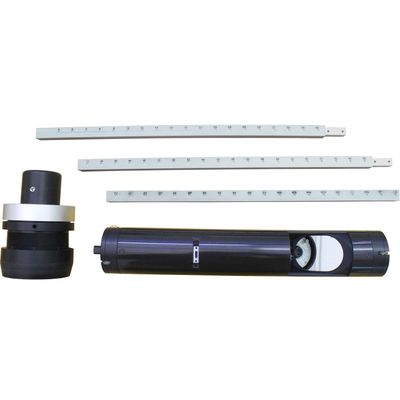
Model LK-1100 - Portable Multispectral Root Analyzer
LK-1100 portable multispectral root analyzer is the plant root photograph imaging system in situ, developed independently by Eco-mind. Through LK-1000, researchers can observe and study the growth, death and distribution of the root, mycorrhiza and root nodule. With the photos and professional analysis software, the root length, root surface, root diameter, distribution pattern, the number of tips and the number of the live or dead root,et al.
Plant Science - Rhizobox System
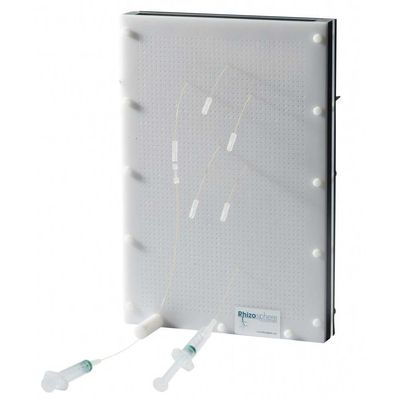
Rhizonboxes for Soil Water Sampling
In cooperation with Rhizosphere Research Products (Wageningen, The Netherlands) we increase the versatility of rhizoboxes by turning them into optional "RhizonBoxes" - which allow in additions to use 1) MicroRhizons for pore water sampling, 2) Rhizons for local soil water manipulation (e.g. salt or heavy metal infiltration) and sampling, and 3) Rhizon Irrigators for passive irrigation.
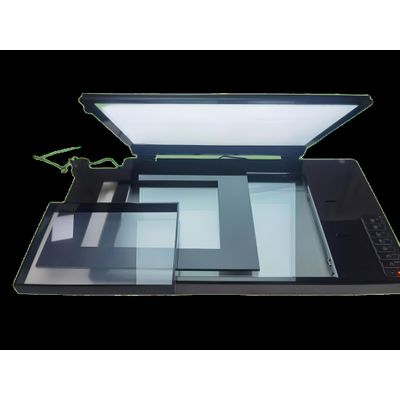
ECO-MIND - Model LK-1910 - The LK-1910 Dual-Light Source Plant Root Analyzer
The LK-1910 Dual-Light Source Plant Root Analyzer is a device specifically designed for capturing color images of plant roots and conducting shadowless scanning. It boasts short preheat time, fast scanning speed, and the ability to save color images with complete root phenotypic characteristics, and supports A4-sized scanning.Plant Science - Rhizobox System
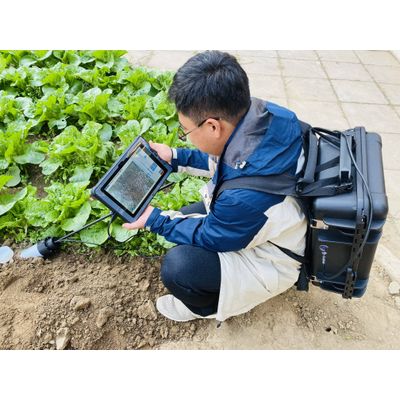
ECO-MIND - Model LK-1580 - LK-1580 Compound Root Growth Dynamic Monitoring System
The LK-1580 Compound Root Growth Dynamic Monitoring System ingeniously combines photography and scanning, leveraging the strengths of both. Through an integrated control software, users can seamlessly switch between photography and scanning modes within the rhizotron, enabling rapid acquisition of high-resolution local images while efficiently capturing broad, panoramic views. This software also boasts powerful image stitching functionality, ensuring efficient and seamless synthesis of large-scale images. Additionally, the system's imaging capabilities integrate six spectral bands, facilitating the easy discrimination between live and dead roots, catering to a diverse range of research needs.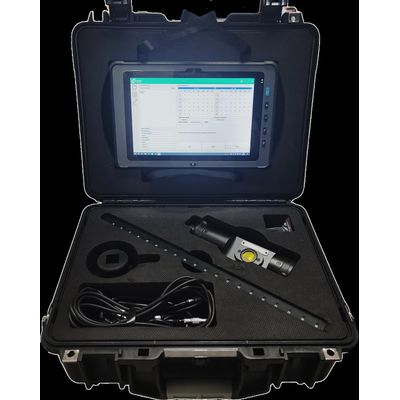
ECO-MIND - Model LK-1400 - LK-1400 In-situ Multispectral Plant Root Analyzer
The LK-1400 In-situ Multispectral Plant Root Analyzer is primarily based on micro-rhizotron technology and multispectral imaging technology. It enables in-situ observation of roots without disrupting the soil structure and root growth environment. By installing transparent micro-rhizotrons in the soil, a high-definition imaging system captures and analyzes root systems within, allowing for targeted, in-situ observation and research on the growth, death, and distribution (root architecture) patterns of roots, mycorrhizae, and even root nodules. By capturing light signals of various wavelengths, this system acquires the reflectance, transmittance, or emissivity characteristics of roots under different spectral conditions.Plant Science - Photosynthesis Efficiency Sensor
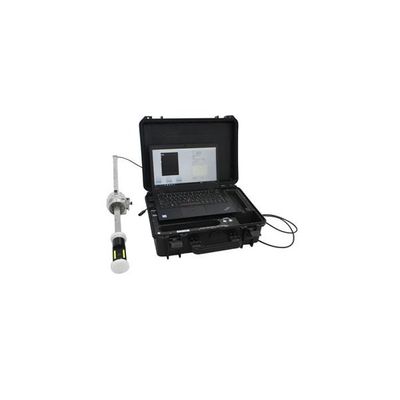
Photosynthesis Efficiency & PAR Sensor
With the photosynthesis efficiency sensor you can determine the rate of photosynthesis of your plant. With the Sendot innovative handheld-set you can measure by simply attaching the optical fibre/leaf clip combination on a leaf. The sensor is equipped with a logger function, which allows the sensor to monitor data in the field for several weeks. The photosynthesis efficiency sensor is available with and without combined PAR measurement. Photosynthetically active radiation (PAR) designates the spectral range (wave band) of solar radiation from 400 to 700 nanometers that photosynthetic organisms are able to use in the process of photosynthesis. By monitoring the photosynthesis efficiency combined with PAR the grower can make better choices as how to establish optimal growth conditions.
Plant Science - Oxygen Sensor
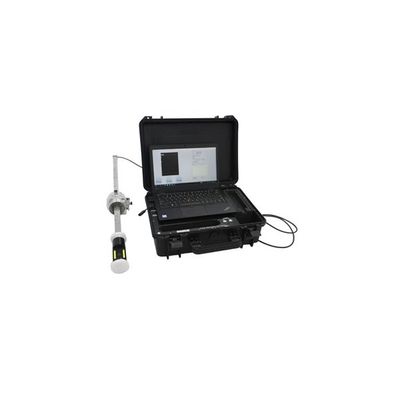
Plant Science Oxygen and Temperature Sensor
The Sendot optical oxygen sensor is based on the principle of fluorescence quenching. The sensitive coating has two components, one to measure temperature and one to measure oxygen. The temperature compensation of the oxygen measurement is thus uniquely and ideally embedded in the same coating. Because the coating does not use oxygen for the measurement this technology can be used in closed, nonstirred environments. The temperature compensation with an embedded component does not suffer from response time differences, making it possible to use the sensor in fast changing environments.