


- Home
- Companies
- Biopract GmbH
- Services
Biopract GmbH services
Enzyme Preparation Research and Development Services
For our employees, research & development has always been a matter of course for our company. We are application-oriented researchers and therefore always endeavor to implement the results in practice. In recent years, we have been intensively involved with the projects presented below. Some of them are involved in contract research projects; others are the result of our own strategic considerations.

Enzyme Analysis Services for Animal Nutrition
Since the 1990’s the use of enzymes has become indispensable in modern agriculture, i.e. by improving the digestibility and utilization of feed ingredients, preserving natural resources and minimizing environmental pollution.
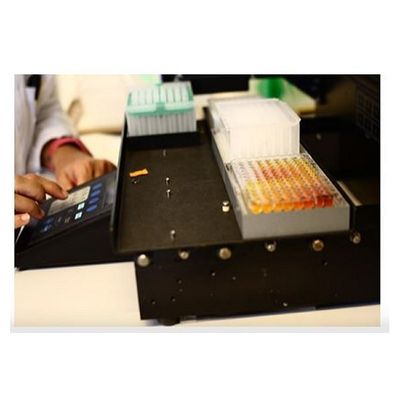
Substrate Analysis Services in Animal Feed
Knowledge of the presence and content of specific ingredients in feed is of great importance for the choice and development of feed enzymes. For example, phytic acid as the phosphate reservoir of the plant: The addition of phytases leads to mobilization and thus to phosphate savings in animal feeds. The phytic acid content of animal feed and its usability vary due to the composition, the varieties used, the soil quality, the climatic conditions and stress, e.g. due to pest infestation. In order to reliably evaluate phytic acid bound phosphorus in animal feed, the analysis of phytic acid is required to allow an adequate dosage of phytase.
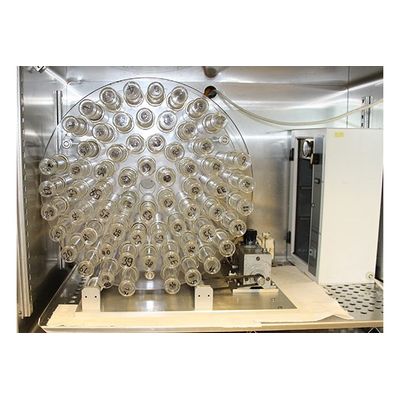
Hohenheim Feeding Value Test Services
The Hohenheim Feeding Value Test was established in the 1980s to determine the energy content of feed for ruminants. The determination of the gas volume produced on the one hand and the chromatographic analysis of the liquid and gaseous phases on the other hand allow the use of this test, modified by us, as a screening tool for the in vitro investigation of different active substances. This test system can be used to assess both the effects of the substances on the utilization of various feed materials and the effects on methane formation in the rumen. Reproducibility and the significance of the results are ensured by controlled conditions in animal husbandry and by standardized analysis in the laboratory. According to the 3R rule (Reduce-Replace-Refine), the performance of in vitro experiments in modified HFT helps to minimize the number of animal experiments necessary for the development of feed additives for ruminants.
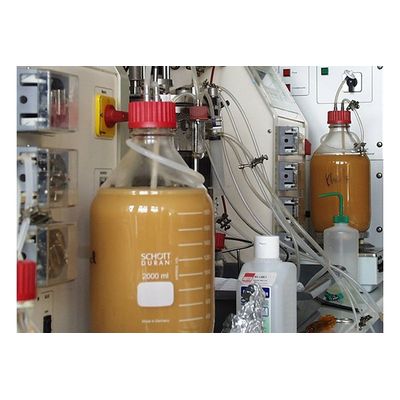
Pattern Preparation of Microbial Biomass
Production and processing of sample quantities of fungi and bacteria for application studies (2-10 liters, aerobic fermentation) in the S1 laboratory.