


- Home
- Companies
- Evers Agro B.V.
- Products
Evers Agro B.V. products
Soil Cultivation & Seedbed Preparation - Subsoiling
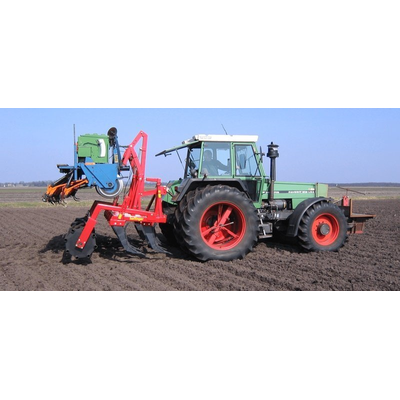
Evers - Model Shetland - Rigid Tine Cultivator
The versatile rigid-tine cultivator is suitable for tillage to depths of 10 to 60 cm. The cultivator loosens the soil thoroughly so that it can accommodate roots well and the soil becomes water-permeable.
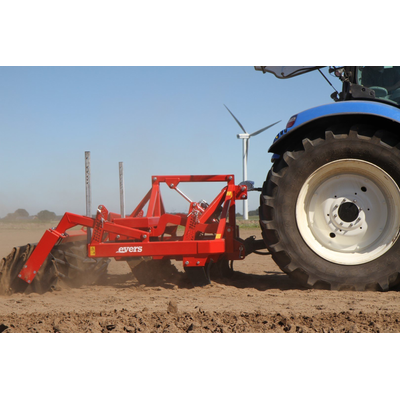
Evers - Model Forest - Multi Purpose Cultivator
The multi purpose cultivator is multifunctional. This cultivator offers a solution in many circumstances, both in light and heavy soil, and in difficult areas for cultivation. The machine has large, rigid tines with free passage to remove any bothersome soil layers.
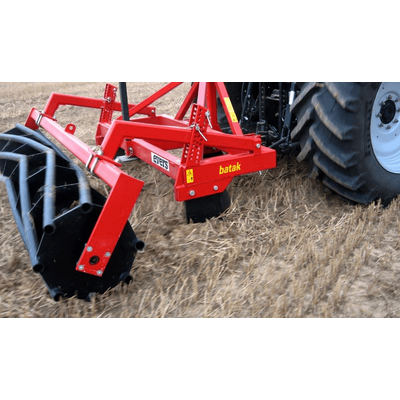
Evers - Model Timor - Subsoiler
Cultivating agricultural land causes changes in the soil structure. The use of heavy farm machinery is just one of the causes of soil compactions. Using a subsoiler to loosen or break up these compactions from time to time, the vitality of the soil is maintained and an optimal soil structure is guaranteed. These are important preconditions for a good yield.
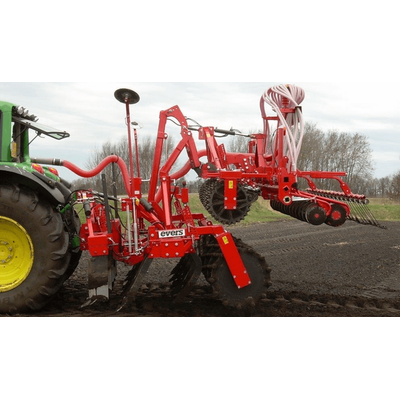
Evers - Model Breton - Pre-Cultivator- Subsoiler
To enable you to carry out deep and shallow cultivation in one pass, Evers offers various solutions by means of pre-cultivators and pre-subsoilers. The pre-cultivator can be used as a separate, front mounted implement or behind the tractor. It is also possible to save passes, by combining the pre-cultivator, for instance, with a Vario-Disc harrow. The pre-cultivator is developed for deeper tillage and combining passes with heavier implements. A disc harrow is a machine that only works the surface to a depth of around 12 cm. By using it in combination with a pre-cultivator, deeper cultivation can be carried out at the same time, without the need for a completely different machine.
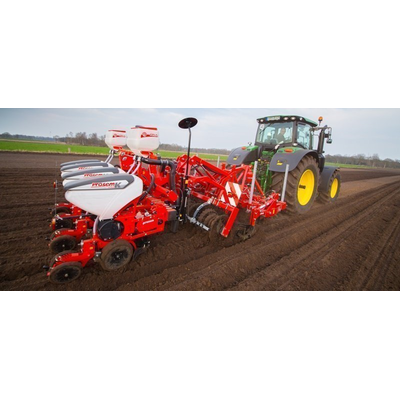
Evers - Subsoiler for Ridge Cultivation
Crops such as maize, oilseed rape and carrots are particularly suitable for growing on ridges. The ridges increase the soil surface considerably. The advantage of the larger soil surface is that more heat enters the soil, especially in spring. This heat makes phosphate more readily available, which results in faster root development.