

FutureFish Aquaculture GmbH products
Recirculating Aquaculture System
RAS is the acronym for Recirculating Aquaculture Systems. RAS fish farms are characterised by an integrated water treatment unit that constantly cleans the effluent water from the culture tanks in mechanical steps and bioreactors to remove solids and toxic nitrogen compounds that are excreted by the fish or shrimp. After being cleaned, the water can be reused and is pumped back to the holding tanks thereby closing the loop. In contrary, in the “open” or “flow through” systems all the water passes through the culture tanks makes only once and then leaves the system often with a significant impact to the environment
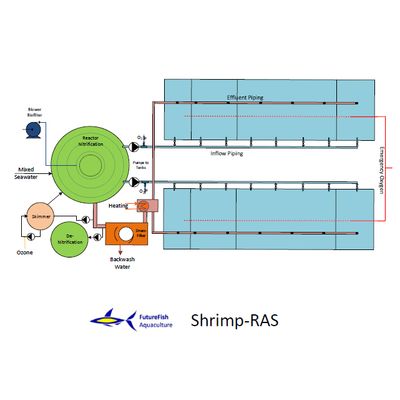
Intensive Shrimp Production
Shrimps are among the most popular seafood items and because of the resulting demand of shrimp in the US, Asia and Europe, the global trade volume of farmed shrimp has increased to a total production volume of 3,95 Mio tons. This is an increase of 400% from the beginning of farming in the 60s until today.One distinguishes between warm and cold-water shrimp as well as salt and fresh watershrimp. The family of shrimp comprises over 3000 species. However, only a handful can be produced under aquaculture conditions. The so called Western White Shrimp or White Tiger Shrimp (lat. Litopenaeus vannamei) has the highest share of all farmed shrimp worldwide.
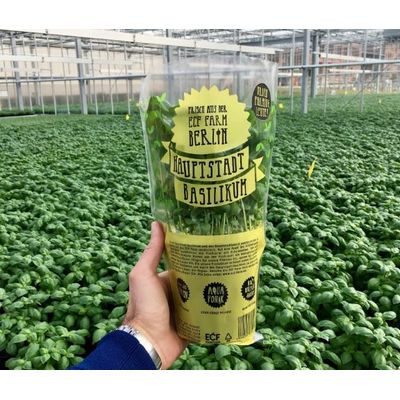
Aquaponic Systems
Aquaponic stands for a combination of a conventional AQUAculturefor fish or other aquatic animals and hydroPONICfor the – mostly soilless – cultivationof plants. The idea is to use the nitrogen that is excreted by the fish as fertilizer for the plants. In the simpler systems this is done as a single recirculation aquaponic system. In comparison to a typical recirculation aquaculture system (=RAS) where the biofilter has the function to convert the ammonia nitrogen in two steps to nitrite and nitrate, in the hydroponic section this role will be taken over by the plants. During the passage through the plant roots, most of the excreted ammonia is converted by bacteria into nitrate that is then consumed by plants. The so cleaned water can be directly launchedback to the fish tanks.