


Royal Horticultural Society products
Perennial Plants
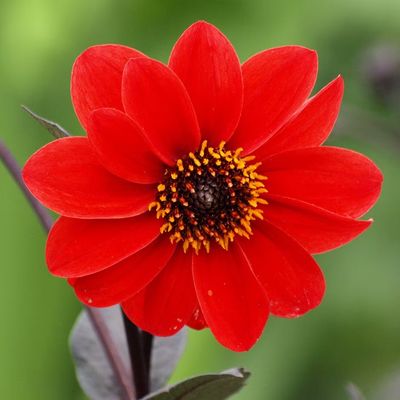
Model Bishop of Llandaff - Paeony-Flowered Dahlia
Position: full sun. Soil: fertile, humus-rich soil. Rate of growth: average. Flowering period: July to September. Hardiness: half hardy (may need winter protection). Striking, semi-double, bright vermilion-red flowers appear from July to September above the deeply divided, dark bronze-red leaves. This popular, peony-flowered dahlia requires a sunny site with fertile, humus-rich soil. Perfect for a planting scheme based on `hot` colours, the tubers must be lifted and over-wintered in a frost-free place in all but the warmest areas.
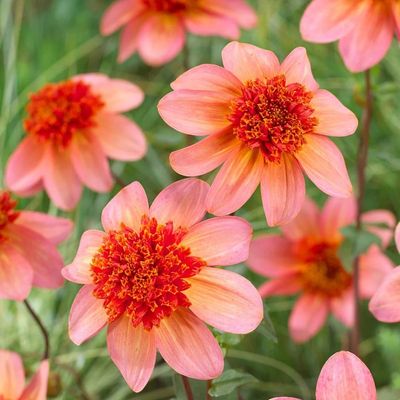
Model Totally Tangerine - Anemone-Flowered Dahlia
Position: full sun. Soil: fertile, humus-rich soil. Rate of growth: average. Flowering period: July to September. Hardiness: half hardy (may need winter protection). Keep on cutting the blooms for the vase, and for several months from midsummer, this dahlia will continuously send up flower after flower. The colouring is a subtle blend of orange and pink, so it mixes easily with both these shades, and it also looks great with deep reds and plum tones.
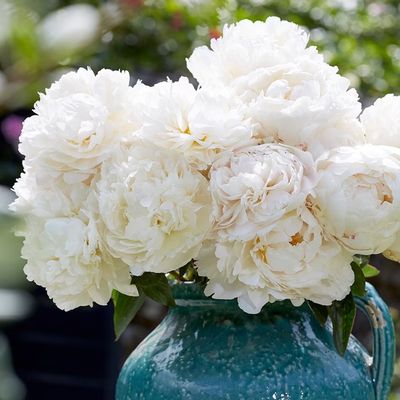
Model Bowl of Cream - Paeonia Lactiflora
Position: full sun or partial shade. Soil: fertile, moisture-retentive yet well-drained. Rate of growth: average. Flowering period: June to July. Hardiness: fully hardy. Prized for their blowsy, glamorous blooms and glossy, deeply cut foliage, ‘Bowl of Cream’ is a stunning, scented peony for early summer. The blooms are so tightly packed that the golden stamens are all but hidden by the delicately ruffled inner petals. Fill the ground around the peony before the leaves appear with spring bulbs to prolong the season of interest.
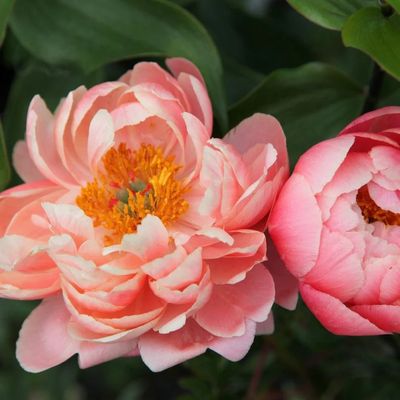
Model Coral Charm - Paeonia
Position: full sun or partial shade. Soil: fertile, moisture-retentive yet well-drained. Rate of growth: average. Flowering period: June to July. Hardiness: fully hardy. Opulent, coral pink semi-double flowers top the slender stems of this herbaceous peony from early to mid-summer. The large, showy flowers will create a fabulous feature in the border, and make spectacular additions to a vase. Absolutely superb, the flowers need to be seen to be believed!
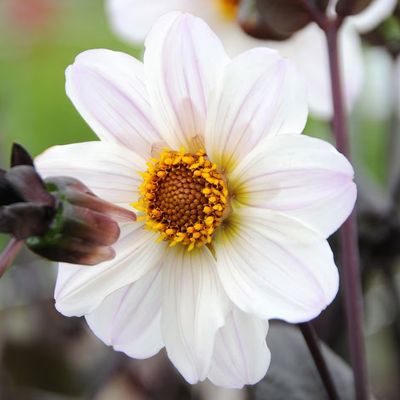
Model Bishop of Dover - Single-Flowered Dahlia
Position: full sun. Soil: fertile, humus-rich soil. Rate of growth: average. Flowering period: July to September. Hardiness: half hardy (may need winter protection). A single row of white ray-florets, which usually have a pinkish violet flush, surround the central disc forming pretty flowerheads that are held on deep purple-brown stems. The purple-tinted foliage offers a wonderful contrast. They make excellent cut flowers and pollinating insects (including bees) will flock to them.
Shrubs
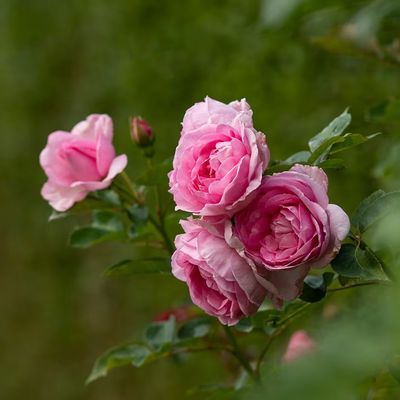
Model Poulren013 - Rosa Mum in a Million (Renaissance Series)
This rose is deciduous so it will lose all its leaves in autumn, then fresh new foliage appears again each spring. Position: full sun. Soil: fertile, humus-rich, moist, well-drained soil. Rate of growth: average. Flowering period: July to September. Hardiness: fully hardy. A perennially popular choice, not just for its name, but for the profusion of large, well-scented flowers that appear continuously for several months throughout the summer. It can be planted in the border, or potted up and placed on a sunny patio, and the flowers will last for ages after being cut and added to a vase.
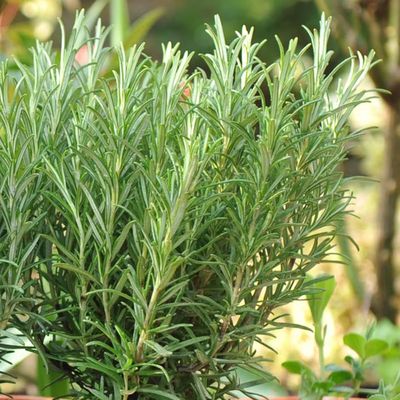
Rosemary Seeds Or Rosemary
Aromatic, dark green, narrow leaves provide interest throughout the year and can be added to a multitude of dishes to enhance the flavour. From mid-spring to early summer (and often again in autumn), lilac-blue to white flowers appear towards the ends of the stems. Ideal for adding structure to the herb garden, it will thrive in a warm, sunny position - ideally close to a path or entranceway where you can brush past them and release their delicious scent. The leaves can be used fresh, dried or frozen and are best harvested in spring, when new shoots are emerging.
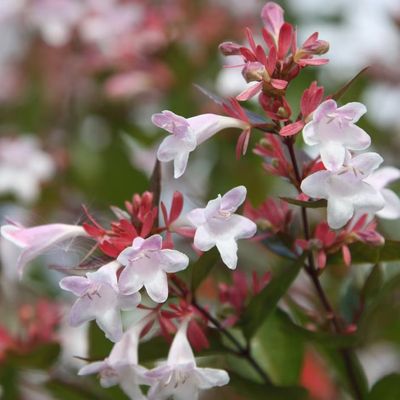
Model Abelia - Abelia × Grandiflora
This shrub is semi-evergreen, so it can lose some of its leaves in winter. In colder regions or more exposed gardens, it may lose them all, but then fresh new foliage appears again in spring. Position: full sun, Soil: fertile, well-drained soil, Rate of growth: fast-growing, Flowering period: June to October, Hardiness: borderline hardy. A useful, long-flowering, semi-evergreen shrub for a mixed border. This abelia has attractive, glossy, deep green leaves which it hangs on to for most of the year. From June, it produces masses of small, fragrant, pink-flushed, trumpet-like flowers on arching branches that go on all summer. As it’s slightly tender, it’s best grown in the shelter of a wall, towards the back of a border. Ideal for a cottage-style garden.
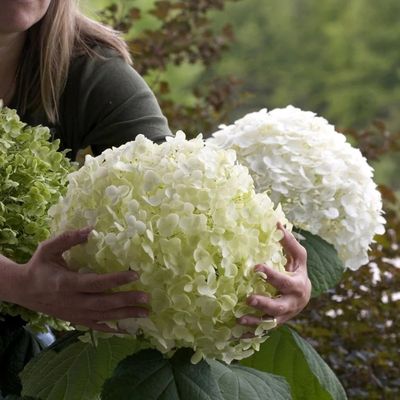
Model Abetwo - Hydrangea Arborescens Strong Annabelle
This shrub is deciduous so it will lose all its leaves in autumn, then fresh new foliage appears again each spring. Position: full sun or partial shade, Soil: moist, well-drained, moderately fertile, humus-rich soil, Rate of growth: average, Flowering period: July to September. Hardiness: fully hardy. This hydrangea has tougher branches than many of the other arborescens types, which means that as they mature they will stand up better in more exposed positions and will rarely flop over when laden with flowers. The glorious bundles of white flowers will also get larger as the plant grows older, but even when they are still quite young, they will put on a dazzling and long-lasting display from mid summer.
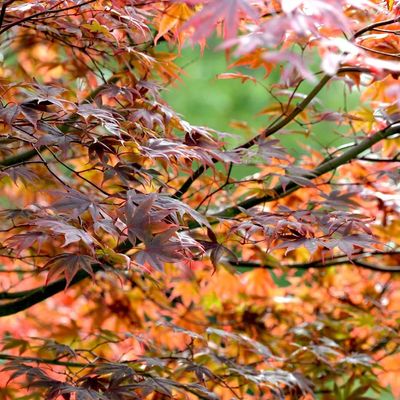
Model Atropurpureum - Acer Palmatum
This shrub is deciduous so it will lose all its leaves in autumn, then fresh new foliage appears again each spring. Position: full sun (but not south-facing) or light shade, Soil: fertile, moist, well-drained neutral to acid soil, Rate of growth: slow-growing, Flowering period: April to May. Hardiness: fully hardy. An elegant small deciduous tree, with deeply lobed dark purple-red leaves that turn fiery red in autumn and tiny purple flowers in spring. This neat, slow-growing acer has an open habit, and looks dramatic silhouetted next to buildings, as a focal point in a small courtyard, or in a Japanese-style garden. It needs a sheltered spot, away from strong winds or all-day sunshine. It also looks good in a container. The leaves may be greener if they do not receive sufficient light.