


Can you create the most profitable crop nutrition strategy?
Participants will compete directly against ADAS crop scientists and the industry standard RB209 to see who achieves the highest gross margin over nutrient costs.
The project aims to understand how farmers and agronomists can use fertilisers and biostimulants more efficiently. It encourages participants to think creatively and plan wisely to achieve the most innovative, cost-efficient crop nutrition strategy.
Deadline to enter the 2026 Challenge is Friday, 12 February 2026.
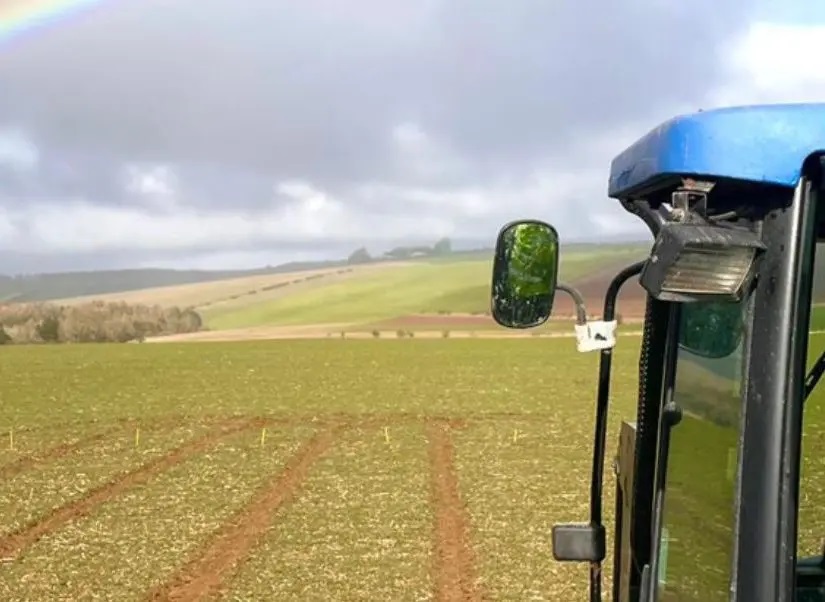
The challenge will take place on the Yorkshire Wolds. Each entrant is assigned a 48 m2 plot of winter wheat, replicated four times.
A separate control treatment will receive nutrition in line with RB209 field assessment recommendations. A second control treatment is left untreated.
Other than fertiliser and biostimulant choice and timings, all other crop applications will remain the same for each entry.
Creating and fine-tuning your strategy
At the start of the season, ADAS will provide the entrants with all the information they would need to plan their initial approach including:
- soil analysis
- soil nutrient supply (SNS) measurements
- grain analysis from the previous year’s crop.
As the season progresses, entrants will receive NDVI and tissue analysis data for the control entries so they can regularly review and, if necessary, re-adjust their strategy to reflect what’s happening in the field.
They also have the option to visit their crop in person and do whatever they deem best to get that profit return.
At harvest, ADAS will then assess biomass and take grain samples from each entry to review yield, crop nitrogen use efficiency, and gross margin.
At the end, all entrants will receive their trial results along with their ranking against the control and ADAS treatments.
Abigail Marshall
Abigail Marshall is a crop scientist based at High Mowthorpe, North Yorkshire and is part of the ADAS Crop Physiology team. She specialises in nutrient management, biostimulants, and applied agronomic research.