


EyouAgro
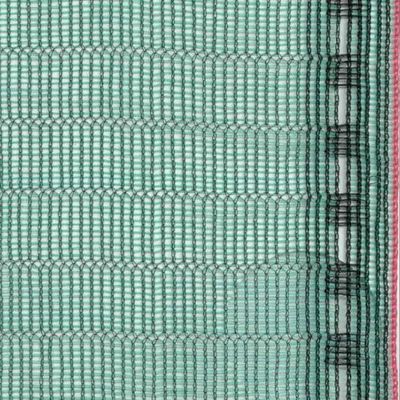
35% WindScreen
FromEyouAgro
Windbreak netting is one of screens protecting the growth of plants or crops from been destroyed by winds They can control erosion, blowing snow, enhance habitat diversity, control air blown litter and dust, reduce evaporation etc.
Most popular related searches
crop foliage
agriculture industry
plant growing
crop transporter
orchard nursery
orchard
nursery
industrial agriculture
nursery crop
crop protection
35% Windscreen is one of the screens protecting the growth of plants or crops from been destroyed by winds. This wind net has been widely used in the agricultural industry.
Feature:
- Weight: 110grm
- Wind Reduction: 35%
- UV Warranty 5 Years Pro-Rate UV Stability
Specification:
- Raw Material: 100% virgin HDPE with UV Stabilizer
- Net construction: Raschel knitted
- Yarn: Monofilament
- Dimensions: 1,00m x 100m - 1,50m x 100m - 2,00m x 100m - 3,00m x 100m - 4,00m x 100m - 6,00m x 100m
Application:
Windbreak Net has many usages, such as:
- Protection of crops, foliage, nurseries, orchards and plantations from strong winds and ravages
- Reduction of mechanical damages like wind rub and bruising
- Prevention of transpiration and evaporation excesses and soil erosion
- Another usage as protective windscreen or on vehicles when transporting crops, plants, animals, or poultry
Installation of the poles:
- The poles need to be anchored firmly into the ground and preferably set into a concrete base (0 80cm and 1 m deep) o Interspace: maximum 3m
- Pole dimensions: 0 8cm x 2m for a net height of 1m, 0 10cm x 2.5m for a net height of 1.5m, 0 12cm x3m for a net height of 2m. o Marks are affixed to the first and last pole near the polyester eyelets (every metre or every 1.5m) to indicate where the cables need to be attached.
- The net is completely rolled out on the ground and the tension cables are passed through the polyester eyelets. 0 3 mm PVC-coated steel wire ropes or polyester cables are to be used as tension cables.
- The net is folded like a curtain. The various cables are attached to the first pole.
- The loose end of the upper cable is tensioned by means of a tackle and fixed to the last pole. This procedure is repeated for the other cables.
- The net is nailed to the first pole by means of a batten. Subsequently, the net is unfolded over the cables up to the next pole and nailed down. Etc
- The net`s eyelets are attached to the first and last pole by means of cable ties. The cable ties are placed around the pole, passed through the polyester eyelets closest to the pole and tightened.
- Finally, the upper and lower cable are nailed to all poles by means of staples.