


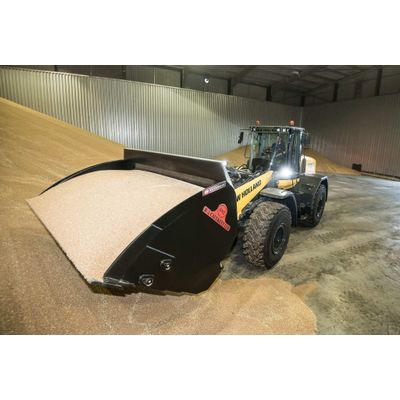
BAC - Grain Buckets
BAC Caulkett high capacity Grain Buckets are designed for the bulk handling of materials including grain, pellets and wood chip. A benefit of the Grain Bucket is that larger volumes can be moved with minimum loss of grain. Where only grain is being transported BA Caulkett can design and manufacture these in a lightweight format which provides significant weight loss advantages. If you are looking for the best high capacity High Tip Grain Buckets, providing increased forward reach and height, improving both cycle times and productivity contact us.
- Independent twin ram
- Quick hitch or direct mount fitment
- Bolt on reversible wear edge
- Bolt on heel plates
- Fitted with hydraulic cross line relief valve to protect the hydraulic system
- Comes complete with all hoses and fittings
BA Caulkett high capacity Grain Buckets are designed for the bulk handling of materials including grain, pellets and wood chip.
A benefit of the Grain Bucket is that larger volumes can be moved with minimum loss of grain. Where only grain is being transported BA Caulkett can design and manufacture these in a lightweight format which provides significant weight loss advantages.
Elements to consider when selecting your Grain buckets
When choosing a loader grain bucket, there are several factors to consider to ensure that the bucket is well-suited to the specific task at hand. Here are some things to keep in mind:
- Capacity: The bucket should have a capacity that matches the size of the loader and the expected workload. A larger capacity bucket can reduce the number of trips needed to transport grain, which can save time and increase efficiency.
- Durability: The bucket should be made of a strong, durable material that can withstand the heavy loads of grain. It should also be able to withstand impact and abrasion from rocks or other debris that may be present in the working environment.
- Material Flow: The bucket should be designed to allow for easy and consistent flow of grain, which can help to minimize grain loss and improve efficiency. Features such as a smooth interior surface and a tapered design can facilitate material flow.
- Low Profile: The bucket should have a low profile to allow easy access to the grain. This means that the bucket should be able to get close to the ground without damaging the grain or the ground.
- Visibility: The bucket should provide good visibility for the operator to ensure that they can accurately position the bucket over the grain. This can be achieved through features such as a clear windshield or a camera system.
- Attachment: The bucket should be compatible with the loader and any attachments that may be needed for the specific task, such as a grain auger or a grain bagger.
- Efficiency: The bucket should be designed to be efficient, both in terms of material handling and fuel consumption. Features such as a lightweight design and a tapered shape can help to reduce fuel consumption and improve overall efficiency.
- Safety: The bucket should be designed with safety in mind, with features such as reinforced corners, safety chains, and easily accessible emergency stop buttons.
- Would you benefit from a Spill Guard. These can be designed into the bucket build reducing the chance of grain spilling whilst in transit.
- What Bucket Angle will provide you with maximum operating efficiency. By having a specific angle designed to suit your head stock this can maximise the crowd and dump potential of your machine
- If you are looking for the floor length to be as short as possible would a curved side profile be beneficial. This design allows a level bucket fill whilst maximising the tear out force
- Depending on your equipment a lightweight grain bucket might provide you with the volume capacity you require but at a fraction of the bucket weight
Overall, choosing a loader grain bucket requires careful consideration of the specific requirements of the task at hand, as well as the features and capabilities of the loader and any attachments that may be used. By selecting a well-designed and well-built bucket, it is possible to improve efficiency, minimise grain loss, and reduce the risk of accidents and injuries.