


- Home
- Companies
- Bayer Crop Science UK
- Products
- Bayer - Brassica Napus
Common Names English: Rape, rapeseed, oilseed rape, canola; German: Raps; French: Colza; Spanish: Colza
Leaves
Alternate, glabrous. Lowest leaves up +25 cm (+9.84 inch) long, lyrate-pinnatifid, with small prickles above and below on leaf tissue.
Middle and upper cauline leaves clasping, glabrous, glaucous, lanceolate.
Margins crenate with prickles caused by veins extending beyond leaf tissue.
Terminal raceme, compact in flower, elongating in fruit to +40 cm (+15.74 inch) long.
Pedicels of flowers 5-6 mm (0.19 - 0.24 inch) long, elongating in fruit. Petals 4, 4-5 mm (0.16 - 0.19 inch) broad at apex, obtuse, yellow, glabrous, to 1cm (0.39 inch) long, clawed.
Stamens 6, erect. Longer 4 stamens with filaments to 4.5 mm (0.18 inch) long, white, glabrous. Shorter stamens with filaments to 2 mm (0.078 inch) long.
Anthers yellow, ovary 4.5 mm (0.18 inch) long, slightly flattened, glabrous.
Style 2 mm (0.078 inch) long, persistent in fruit as beak.
Sepals 4, yellow, glabrous, linear, spreading to erect.
April - September.
FruitAscending, 5-10 cm (1.97 - 3.93 inch); pedicel spreading to ascending, slender; beak 7-11 mm (0.27 - 0.43 inch), seedless.
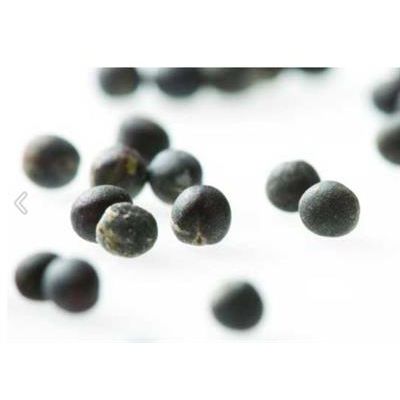
SeedsGermination occurs all year round. Seeds are reddish-brown to blue-black and round.
Viability of SeedsUp to 10 years.
PropagationUp to 20,000 seeds/plant.
Cultivated and escaped to waste places, roadsides, railroads.
SoilLight (sandy), medium (loamy) and heavy (clay) soils, well-drained soil, can grow in heavy clay soil, acid, neutral and basic (alkaline) soils, requires moist soil.
Agricultural ImportanceSeeds of volunteer Brassica napus are initially dormant and persist up to 3-4 years in the soil. Plants of Brassica napus in subsequent crops are very competitive and partly difficult to control, the problem increases with reduction of tillage intensity and less diverse crop rotations.
Brassica napus serves as a host for various pests and diseases.
Stubble cultivation, alternation of winter annual and summer annual crops and plowing after Brassica napus production can decrease the density of volunteer crop.