


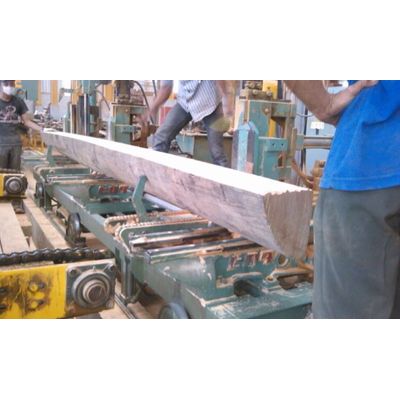
Firewood
Firewood is made of locally supplied Spanish timber. The wood species we use to make firewood are: Ash, Oak, Birch, Alder, Pine and Fir. Each log can be cut into pieces of 25, 30 or 45 cm, split 4-6 times for 8-15 cm diameter and stacked into lm\ 1,8m3, 2m3 or 2,2m3 boxes or bags of 9.5 L, 21 L, 30 L, 40 L or 60 Liters. Basically, the timber has similar calorific value, only difference is the density. There are 3 categories for calorific value. This value is the energy (expressed in kcal or Kilowatts), released by burning exactly 1m3 solid timber. On the basis of density, the firewood species have their unique features. 1st group firewood burns at highest temperature and it is most suitable for house heating in bigger boilers. For the Barbeque fireplace or Sauna, the most suitable is Birch. The 3rd group firewood is burning at relatively low temperature; therefore it is safer for smaller furnaces to protect from cracking the chimney walls.
The value of timber species, in Relation to Volume and Mass table:
The heat value from different timber species you can calculate by comparing the heat value of solid timber and the density of timber. Example (based on average values): the lm3 of solid Oak (Group I) timber firewood is the same as 1.71m3 solid timbers of Pine (Group II), or 2.16m3 of Fir (Group III), comparing the heat energy it generates.
Firewood is sold in 3 levels of moisture: fresh (35-55%), air-dried (25-35%) or kiln-dried (<25%).
For natural air-drying we use the yard next-to warehouse. The boxes arc kept with clearance of 30 cm to ensure 360° air ventilation and quick moisture release. During the storage, each box is covered with top to protect from direct rainfall.
For kiln drying wc rent a few drying chambers from the near-by constructional timber producers. The normal drying cycle in the kiln is 100 to 150 hours. The temperature maintained is 60° C. After the drying, the firewood is kept outside to ventilate excess vapor for minimally one day. For the moisture limit in the kiln-dried firewood, the Formula of Average Firewood Humidity is used. We take Moisture levels at:
- Outside End of log
- Inside End of log
- Inside Center of log
Then divide the sum by 3 and that is the Average Moisture of Firewood. The standard normal log has 15-20% outside moisture and ~30% in the very center inside of log.
For summer season we recommend to stock-in with Fresh firewood. This way, you will save money, because firewood timber prices are cheapest in spring. Also in 3 to 4 months the firewood gets dried naturally, so minimal or none chamber-drying is required any more. So, the drying cost is saved as well.
The packing of Firewood in Boxes
The firewood is packed into easy-access wooden boxes. If packed into bags, then the bags arc stacked into boxes. Boxes arc the best way to manipulate and transport firewood. The basic limitations arc the weight of cargo - its 24 tons and the space inside the trailer. The volume is rarely a limitation (except for sea container) and the number of boxes depends on box size, timber species and humidity of firewood.
The different schemes for loading firewood into the truck are provided in the table:
The volume of firewood in boxes is measured in Raumcter or Stere. 1 RM or Stcre is equal to 1 m3. The typical box dimensions (measured Inside, Length x Width x Height, m):
*+/- 2 cm tolerance due to handcraft and other factors is accepted. The dimensions of box shall be equal or very close to announced volume (i.e. 1.13x0.93*1.9=1.9967m3 is called a 2 RM box).
For the outer dimension of box (to calculate the floor space required), add 5-7 cm on each inner dimension.
To convert one Raumeter volume to solid wood volume, following coefficients arc used:
On the average 1RM = 0.62-0.64 m* of solid wood.
Coniferous trees 1RM = 0.53 - 0.68 m3; Leafy (hardwood) trees 1RM = 0.49 - 0.67 m\
The regular log is 8 to 15 cm in diameter. The length can be 25 cm, 30 cm and 45 cm and depends onto which size (1RM, 2RM or 1,8RM) box they arc stacked. The box has 1-2 rows of firewood pile on top.
The different log length determines the volume multiplier. The shorter the log, the less "empty space" there`s in the box. Hence, the 30 cm logs occupy space in box more complete than i.e. 45 cm logs. To understand the volume in Raumeter (Stcremeter), as compared to solid wood volume, the table below to be used. A reference point is a 1 x 1 x 1 meter box, filled with 100 cm long logs. This box would have a multiplier of 1.
Example: if you have 2m3 of firewood, cut into 100 cm logs, it would occupy exactly 2 RM. If you have a 2m3 box with 30 cm logs inside, it equals to 3.04 m3 of solid wood. If 2m3 of solid firewood are cut into 25 cm logs, the space occupied then equals 2 m3 X 1.67 = 3.34 RM. Simply - the shorter the logs arc, the more "solid" timber the same size box contains. Most popular length is 30 cm.
For the production in bags, Biomasa Forcstal SL specializes in 40 L bag production. Standard-conforming bag is 50 x 72 cm and weighs 14.5 -15.5 kg for Kiln dried firewood. Other popular sizes are 21 L or 60 L. Another popular product is the kindling sticks. The pre starters (kindling sticks) are 10-12 cm long ~2cm diameter tiny pieces of dry firewood (the humidity 10-15%). The sticks are packed into 9.5 Liter (3 - 3.5 kg) or into 30 L (5 - 5.5 kg) bags. Bags arc stacked onto pallets. The 9.5 L bags arc packed onto ~lm3 box (96 bags per pallet); the 30 L bags arc stacked into 2m3 boxes (78 bags).