


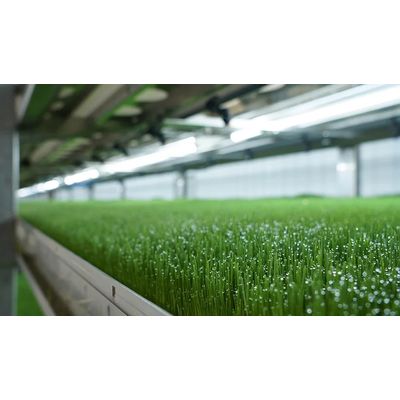
Fodder Farms
Use of water
-
By applying water directly to the root of the plants and recycling the water several times, water wasted is significantly reduced
-
On average, 1.5-2 liters of water are needed to produce 1kg of green fodder hydroponically, in comparison with up to 160 liters required to grow grass under field conditions.
-
The use of hydroponics accelerates fodder production by as much as 25%
-
Plants mature faster and more evenly under a hydroponic system than a conventional soil based system
-
One kg of un-sprouted seed yields 8-10 kg green forage in 7-8 days
-
Hydroponic fodder containers can produce up to 1,000kg of barley or maize fodder within 7-8 days, in only 29m2
- In conventional farming, one hectare of land would be required to achieve a similar yield
Nutrition
-
While dry matter content is slightly reduced depending on grain type, hydroponic fodder is richer in crude protein, fibre, ether extract, vitamins and minerals
-
Hydroponic fodder feeding has been proven to improve milk yield and composition of dairy cows through increased intake and digestibility of nutrients