


- Home
- Companies
- Hamlet Protein A/S
- Products
- HP AviStart - Broiler Starter Feed
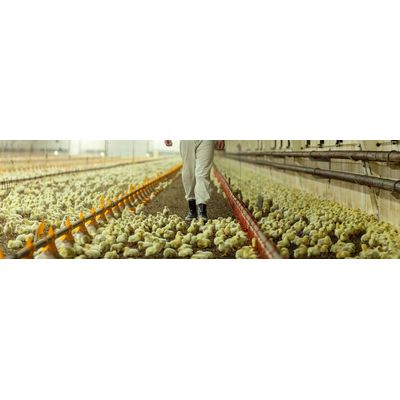
HP AviStart - Broiler Starter Feed
Young chicks have very different digestive and nutritional requirements than older broilers. The highly digestible protein in HP AviStart helps chicks get the very best start in life, improving your return on investment. Chicks grow and develop at a high rate during the first two weeks after hatching. Each chick doubles in weight several times as the heart, liver and digestive tract gain the necessary size to support developing muscles and bones.
Many nutrients are necessary to assure proper growth, but the ability to absorb nutrients is limited by the chick’s underdeveloped digestive tract. In this sense, young chicks are more sensitive to a shortage in protein than in lipids or carbohydrates. The residual yolk provides 30% of the nutrients required for growth and maintenance after hatch. However, the protein contribution from the yolk sac is exhausted much earlier than that of energy (Swennen et al., 2010).
To overcome the limitations of the immature digestive tract, a special feed is essential. When nutrient uptake is enhanced during the first days of life, particularly that of protein, overall performance may be improved right up to slaughter. Tests prove HP AviStart can make a significant difference.
HP AviStart – key findings
End weight and feed conversion ratio are improved when 5-10% HP AviStart are included in broiler starter feed,
compared to the control diets.
The feeding trials in brief
- 20 trials including 44 assessments (HP AviStart-supplemented diets vs control diets)
- Conducted around the world
- Performed by external partners
HP AviStart was fed (5-10%) during the starter phase from day 0 to day 7-14. The trials ran for 35 to 42 days.
The feeding trials primarily compared HP AviStart with soybean meal or other protein sources such as fishmeal,
potato protein, corn gluten etc.
The trials were restricted to broilers fed isocaloric diets with similar amino acid content. They must have reported a
measure of variance.
The current meta-analysis includes body weight, feed intake and FCR.