


- Home
- Companies
- Greener Crop Inc.
- Products
- Indoor Vertical Farms
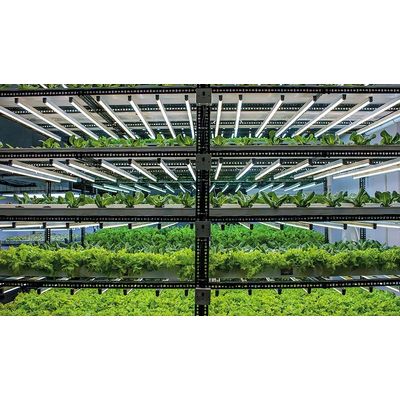
Indoor Vertical Farms
Advantage: Full control
-
The absence of external factors such as temperature, sunshine, and humidity allows farmers to accurately set the perfect amount of nutrients, sunlight, water, CO2, warmth, and humidity
-
Automated controllers react to data gathered by IoT sensors in real time
Advantage: Small footprint
-
Growing vertically means that the yield per m2 of floor space is multiplied by the number of layers
-
The result is a yield per m2 of often more than 100kg
-
This makes indoor vertical farms particularly suitable for urban environments with high real estate prices
Disadvantage: Cost
-
While indoor vertical farms can be highly profitable, the initial setup cost for the building and the hydroponic system is expensive
-
Utility costs for cooling and running LED lights are comparatively higher than in other hydroponic farm setups
-
While indoor vertical farms are called "plant factories" due to their high productivity, there are limitations for the crops they can grow
-
The crops most suitable for indoor vertical farms are lettuces, micro greens, herbs, and strawberries, while larger crops such as tomatoes, capsicum, eggplants, etc are not viable