


- Home
- Companies
- Hello Nature International Srl
- Products
- Hello Nature - Model Vegamin 2-1-3 - ...
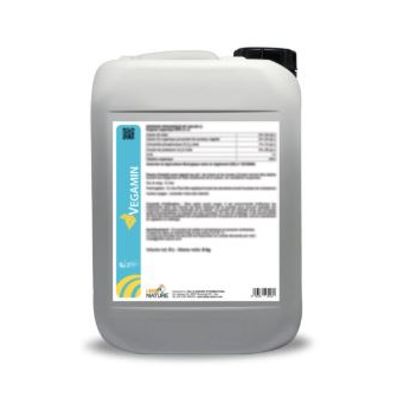
Hello Nature - Model Vegamin 2-1-3 -Liquid Biostimulant for Root Development and Plant Growth
Vegamin 2-1-3 is a liquid biostimulant developed by Hello Nature, crafted entirely from vegetal matter to support various stages of plant development. This biostimulant is particularly beneficial for fertigation systems, offering a robust application versatility across all seasons, especially during the critical seedling and young plant phases. The formulation contains organic NPK ingredients which are released slowly into the soil, acting as a booster and builder to enhance soil fertility and improve microbial activity within the rhizosphere. Vegamin provides early nutrient access without the risk of phytotoxic effects and serves as a food source for beneficial soil microorganisms. Its effective application includes in-furrow and fertigation methods, supporting weekly usage throughout the growing season together with NPK fertilizers. This makes Vegamin an asset for industries such as greenhouses, nurseries, specialty crops, horticulture, hydroponics, and ornamentals.Vegamin is a liquid biostimulant made from 100% vegetal matter that is suitable for fertigation systems and appropriate for application during all seasons, especially during the seedling and young plant life cycles.
Vegamin is a vegetal-based biostimulant designed to boost root development, energize plant growth, and increase soil fertility. Thanks to its slow-release organic NPK ingredients, Vegamin acts as a soil builder and booster, giving plants early access to quality nutrients without risks of phytotoxicity, while providing a food source for soil microbials and improving the rhizosphere.
Reduces:
- Nutrient deficiencies
- Plant stress/shock
- Saline stress
- Soil tiredness and erosion
Improves:
- Plant energy production
- Root development
- Uniformed plant growth
- Soil fertility and vitality
- Soil structure and water retention
- Soil microbial activity
- Uptake of nutrients and essential elements
- Organic matter in the soil
Designed for fertigation systems and can be used after plantation, transplanting, and during the vegetative growth season or vegetative growth.
In average conditions:
In-furrow as a starter: apply 5 L/ha
Fertigation: apply 5 L/ha. Can be applied every week during the growing season, together with NPKs.
Industries: Greenhouse, Nursery, Specialty Crops, Horticultural, Hydroponic (soil-less), Ornamentals
Vegetal Protein Hydrolysates
Hello Nature’s Vegetal Protein Hydrolysate products are made exclusively from the highest quality, non-GMO vegetal sources and are guaranteed to contain no animal by-products. They are produced using a proprietary Enzymatic Hydrolysis process and naturally contain organic nitrogen, organic carbon, and Plant Stimulating Peptides.
Nitrogen (N)
Plays a very important role in various plant physiological processes. It imparts dark-green color in plants, promotes leaves, stem and other vegetative part’s growth and development. Moreover, it also stimulates root growth. N produces rapid early growth, enhances the growth of leafy vegetables, and increases protein content of fodder crops.
Organic Matter
Primarily composed of carbon, organic matter in soil has direct benefits for agricultural production. Soil organic matter plays a vital part in enhancing soil fertility and quality, on three levels: chemical (capacity to store and supply essential nutrients), physical (improve soil structure and water holding capacity), and biological (enhance biodiversity, improve microorganisms’ activity, and capture carbon).
Phosphorus (P)
Is essential in photosynthesis and respiration. Seeds have the highest concentration of P in a mature plant, and P is required in large quantities in young cells, such as shoots and root tips, where metabolism is high and cell division is rapid. P aids in root development, flower initiation, and seed and fruit development.
Potassium (K)
Is vital for plant metabolism. It helps in the development of a strong and healthy root system and increases the efficiency of the uptake and use of nitrogen and other nutrients. K helps photosynthesis, regulates the water status in the plant and plays an essential part in the formation of starch and in the production and translocation of sugars. K not only increases yields but also enhances fruit quality, improving flavor and color and increasing the size.