


- Home
- Companies
- Hunan Coda Electronic Tech Co., Ltd.
- Products
- Coda - Model CDW-15A - O2 Sensor In ...
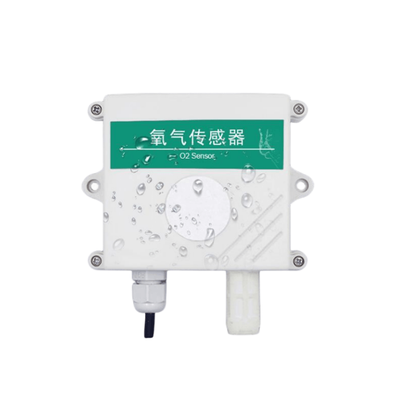
Coda - Model CDW-15A -O2 Sensor In Greenhouse Agriculture Farm Oxygen Detector
CDW-15A Support RS485/4-20mA/0-5V/0-10V/NB-IoT/LoRa/WIFI/ Ethernet and other signal output to meet different environmental requirements. Wireless transmission, no wiring, low power consumption, stable performance.
Item: Technical Specification
Range: 0-30%(RS485),0-25%(Analog signal)
Accuracy: ±3%FS@25℃
Supply: 10-30VDC
Output: 4-20mA,0-5V,0-10V,RS485,NB-IOT,LORAWAN,4G,Ethernet
Power Consumption: <0.15W
Warm Up Time: 3min
Response Time: <15s
Temperature Drift: ≤0.2%FS/℃
Stability: <±2%fs
Repeatability: <±1%fs
Operating Temperature: -20℃-+50℃@15-80%RH
Storage: -40-60℃@20%-90%RH
Shell material: ABS
An oxygen sensor, also known as an O2 sensor, is a critical component of modern automotive engines and other systems that rely on precise air-fuel mixture control. These sensors monitor the oxygen content in the exhaust gases of an internal combustion engine and provide feedback to the engine control unit (ECU) to adjust fuel injection and optimize combustion efficiency.
Most modern oxygen sensors use a zirconia-based electrochemical cell to measure oxygen concentration in the exhaust gas. The sensor consists of a ceramic sensing element with a porous platinum electrode on both sides. One side of the sensor is exposed to the exhaust gas, while the other side is in contact with the ambient air. A voltage is applied across the sensor, causing oxygen ions to migrate through the zirconia electrolyte in response to the oxygen concentration gradient. This generates a voltage signal proportional to the oxygen concentration, which is interpreted by the ECU to adjust fuel injection and maintain the optimal air-fuel ratio.