


Kingoal Milling - Model TQLM -Plane Revolving Sifter for Grain Cleaning
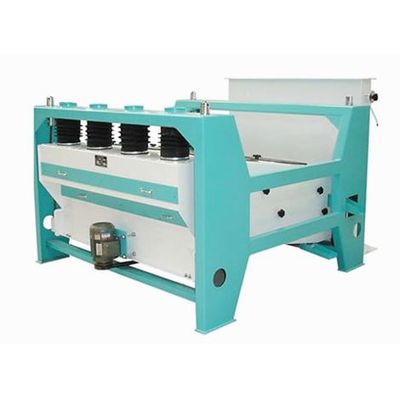
The TQLM Plane Revolving Sifter from Kingoal is primarily designed for efficient grain cleaning in milling operations involving wheat, durum, corn (maize), rye, soybeans, oats, buckwheat, spelt, millet, and rice. This sifter separates coarse and fine impurities from grains using its two sieve desks, effectively removing larger contaminants such as large kernels, string, straw, wood, stones, and clumps of soil, as well as smaller impurities like sand and grain breakage. Unlike vibrating sifters, the revolving sifter operates on a flat plane, enhancing the sorting of larger impurities. For optimized performance, it can be outfitted with an optional aspiration channel or air recycling aspirator to remove low-density particles such as dust, hull fragments, or husks. The sifter is available in various models with capacities ranging from 2-18 tons per hour, making it adaptable for different milling capacities.
Separates coarse and fine impurities from grain via screening and classifies a broad range of materials according to size.
Kingoal has accumulated rich experience in providing the right solution for clients all over the world. Willing to establish business relationship with you.
The TQLM Plane Revolving sifter is used primarily for grain cleaning in the milling of wheat, durum, corn (maize), rye, soybeans, oats, buckwheat, spelt, millet and rice. It separates coarse and fine impurities from grain via screening and classifies a broad range of materials according to size. The Main different with vibrating sifter is that the revolving sifter is flat when it revolving, some big impurities can be sort effectively.
Excellent separation effect for efficient grain cleaning.
With its two sieve desks, the Plane revolving sifter removes coarse impurities like large kernels, string, straw, wood, stones or clumps of soil, as well as fine impurities such as sand and breakage from the grain. In order to optimize the cleaning effect, an optional aspiration channel or air recycling aspirator can be employed, through which low-density particles such as dust, hull fragments or husks can also be separated.