

- Home
- Companies
- Zhengzhou Huaqiang Heavy Industry ...
- Products
- Raw materials of microbial organic ...
Raw materials of microbial organic fertilizer - Raw materials of microbial organic fertilizer
In the organic fertilizer production line, the commonly used raw material treatment is an important link in the production process of microbial fertilizer.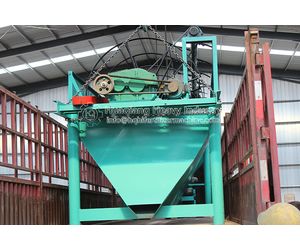
In the organic fertilizer production line, the commonly used raw material treatment is an important link in the production process of microbial fertilizer. Whether the treatment is appropriate will directly affect the fermentation effect and the utilization rate of raw materials. How to deal with the raw materials in the production of microbial organic fertilizer?
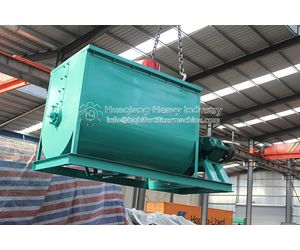
The bean cake should be crushed to proper size, which is convenient for moistening and cooking. The degree of soybean cake comminution should be fine and uniform. The particle size should be 2-3 mm, and the amount of powder should not exceed 20%. Bran should be light, loose and need no further treatment, but it should be fresh, mould free and pollution-free.
Raw materials can be used for moistening with cold water, warm water or hot water. But the effect of near boiling hot water is better: not only the time of moistening is short, but also the protein can be heated and solidified without viscosity, reducing the loss of soluble components. Therefore, hot water is often used. In the production process of fertilizer equipment, it is necessary to strictly control the water holding capacity of raw materials, which can be based on the moisture content of clinker, generally 47% - 48% in winter, 48% - 49% in spring and autumn, 49% - 51% in summer.
The steaming material can make the protein in the raw material moderately denatured. Generally, the steaming material should be one cooked, two soft, three loose, four non sticky, five non sandwiched, six clinker's inherent color and aroma, and provide the basis for enzyme decomposition and microbial long-term utilization. At the same time, the microorganism attached to the raw material is killed to improve the safety of production. After steaming, it must be cooled quickly and the caked part must be broken. The rotary cooking pot with decompression cooling equipment can be directly cooled in the pot for inoculation and cultivation.
Microbial fertilizer is a kind of biological fertilizer, which can improve soil structure, eliminate soil compaction and improve crop quality. However, no matter what kind of fertilizer is applied, if you want to use it more effectively, you should pay attention to the following points in the application process:
1. Product itself:
(1) Shelf life. Do not use microbial fertilizer with longer storage time than the shelf life. At present, the life time of effective bacteria of microbial fertilizer produced by organic fertilizer production line is more than 1 year, the selected microbial fertilizer should be used as soon as possible, and the effect of overdue microbial fertilizer is certainly not good. There are also some microbial fertilizers that can be stored for a long time, usually for 2 years. If they are stored for more than 4 years, they can destroy the dormancy state of the strain.
(2) The number of bacteria. If the effective number of viable microorganisms fails to meet the standard, fertilizer cannot be purchased. The effective number of viable microorganisms of microbial agents produced by fertilizer equipment is ≥ 20 million / g (particles are 100 million / g), and the effective number of viable microorganisms of compound microbial fertilizer and bio organic fertilizer is ≥ 20 million / g. If this standard is not met, the product quality is not up to the requirements. The number of effective active bacteria in microbial fertilizer of Gymboree is about 500-900 million / g.
2. Conditions for use:
(1) temperature. The optimum temperature for application of bacterial fertilizer is 25-37 ℃, lower than 5 ℃ and higher than 45 ℃. It is not suitable for farmland under the conditions of high temperature, low temperature and drought. At the same time, the optimum growth temperature of Azotobacter was 60% - 70% of soil moisture.
(2) Location. For the soil with high sulfur content and rusty paddy field, as sulfur can kill biofilm, biofilm fertilizer should not be applied. For the boiling paddy field, there is generally no need to apply medicine, and the spraying effect will be better.
(3) during the period. Biological bacterial fertilizer is not a quick acting fertilizer. It has the best effect when it is applied to the critical period and absorption period of crop nutrients for 7-10 days.
(4) mixing. It should be noted that fertilizer should not be fungicide, insecticide, herbicide and fertilizer sulfur (for example, potassium sulfate, etc.) and mixed with straw ash, because these drugs, fertilizers, organisms are easy to kill bacteria. Or for the first time, call herbicide 48 hours later. If the dressing is used, it should not be mixed with salting fungicide. It should not prevent the decomposition of fertilizer and compound fertilizer.
(5) dosage. The application of biological bacterial fertilizer can not reduce the amount of chemical fertilizer and organic fertilizer for the farmland that has been applying chemical fertilizer for many years. Due to the dependence of crops on chemical fertilizer, it is not suitable to replace chemical fertilizer with biological bacterial fertilizer at the same time. As a result, the first, second and third year alternatives should be 30%, 40% and 60%, respectively. Phosphorus and potassium fertilizer can only be supplemented, not reduced.