


- Home
- Companies
- NEMIS Technologies AG
- Products
- N-Light - Salmonella Risk Test
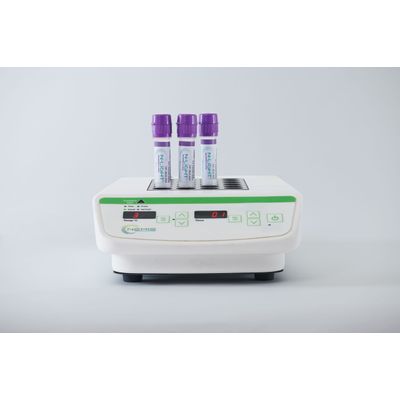
N-Light - Salmonella Risk Test
We are witnessing a shift within the food industry. In the future, the way to prevent outbreaks and recalls will be a robust Salmonella environmental monitoring program. Today, sufficient self-controls are expensive due to the large scale of the processing environment where potential contamination may exist and from where cross-contamination may occur. Current methods require a high capital investment and do not allow the number of samples needed for a suitable risk assessment.
In the case of Salmonella, finding the organism in ‘high-care’ and ‘high-risk’ production and processing facilities is particularly challenging. According to experts, perhaps 1 out of 1000 samples may be positive even within an excellent environmental monitoring program. The high number of negative results may create a false sense of security.
The answer: N-LightTM Salmonella Risk is a rapid detection method for quality managers in the food industry who are frustrated with the low number of actionable results their monitoring produces. Implementing this method in your environmental monitoring allows for simple, safe, and affordable lab-free risk screening for Salmonella. It enables you to take immediate corrective actions regarding potential contamination hot spots. Key to this new approach is the ability to increase coverage and flexibility on-site. Ask us today how you can combine N-LightTM screenings with your current practices to create a winning advantage in detecting Salmonella and other pathogens early in process control.
Whilst the source of Salmonella spp. may be from farm animals and poultry meat and by-products, contaminated faeces can be crucial. This can contaminate water used in irrigation, transport and washing of cereals, fruits and vegetables. Salmonella typically spreads to food as a result of poor hygiene practices. It can therefore present a significant cross-contamination risk as it can survive, grow, and spread whether the environment is wet or dry. Unlike Listeria monocytogenes, its prevalence is likely to be much lower. It presents a real challenge to find.
It is crucial to detect and eliminate Salmonella early on because some strains can multiply at temperatures as low as 7°C. Some strains can be slightly heat-tolerant, particularly in foods that are dry or rich in fat, e.g. salty snacks, seeds, spices and dairy powders.