


- Home
- Companies
- Shuliy Machinery Co. Ltd.
- Products
- Shuliy - Model SL - Solid yogurt ...
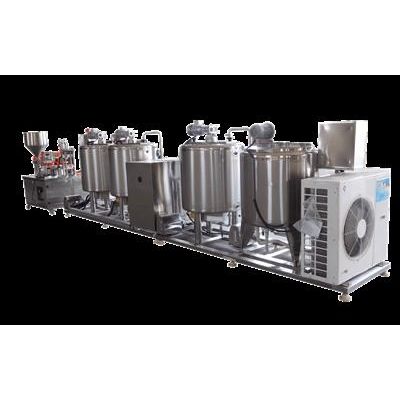
Shuliy - Model SL -Solid yogurt production line
Yogurt is a milk product that uses fresh milk as a raw material. After pasteurization, it adds beneficial bacteria and fermentation agents to the milk. After fermentation, it is cooled and filled. At present, the yogurt products on the market are mostly coagulated, agitated and added with fruit juice jams and other accessories. Yogurt not only retains all the advantages of milk, but also enhances and avoids disadvantages in some aspects after processing, making it more suitable for human nutrition and health products.The yogurt market has huge potential. At present, the domestic dairy market is dominated by pure milk and milk powder, and yogurt accounts for only about 15% of the total dairy market share. In mature foreign dairy markets, the proportion of yogurt generally reaches about 40%. Judging from the data comparison alone, the domestic yogurt market has huge potential, and there is still about two times the upside.
1. Quality requirements for fresh milk
(1) Solid content: The total dry matter content of fresh milk must not be lower than 11.5%, and the non-fat dry matter must not be lower than 8.5%, otherwise it will affect the protein curdling effect.
(2) Detection of residual antibiotics in fresh milk: The contamination of antibiotics will restrict the growth of lactic acid bacteria, so fresh milk contaminated with antibiotics must not be used as raw materials.
(3) White blood cell detection: White blood cell content often affects the quality of fresh milk.
(4) Miscellaneous bacteria detection: molds, yeasts, Bacillus, E. coli and other miscellaneous bacteria will affect the quality of fresh milk raw materials.
2. Processing of raw milk
(1) Purification of milk: Use a specially designed centrifuge to remove white blood cells and other foreign matter visible to the naked eye.
(2) Standardization of fat content: Use a separator to degrease the milk, and add a small amount of cream to prepare it, such as normalizing the fat content.
(3) ingredients
① Milk powder: Add 1% to 3% milk powder to adjust the non-fat dry matter.
② Sucrose addition: 4% to 8% sucrose is added to adjust the taste of yogurt.
③ Homogenization: Heat the prepared milk to 60 °, and homogenize with a homogenizer at a pressure of 8-10Mpa. ④ Sterilization: pasteurization method at high temperature, keep sterilization at 90 ~ 95 ℃ for 5min.
3. Inoculation
The working starter is added to the sterilized raw milk at 43 to 45 ° C, the general amount is 2% to 3%, and the working starter is Streptococcus thermophilus and Lactobacillus bulgaricus, the ratio is 1: 1 or 2: 1. 4. Repacking: Yogurt cannot be subjected to mechanical vibration after fermentation, so it must be repacked before fermentation.
4. Fermentation
The packed milk is fermented in a fermentation rack, and the temperature is maintained at 40-43 ° C. Fermentation usually takes 3 to 6 hours.
5. cool down
After the fermentation is completed, it is quickly cooled to about 10 ° C with cold air to prevent excessive fermentation and excessive acidity from affecting the taste.
Refrigerated and post-cooked The cooled yogurt is stored in a refrigerated room at -1 to 0 ° C.
website:https://taizyfoodmachines.com/yogurt-production-line/