


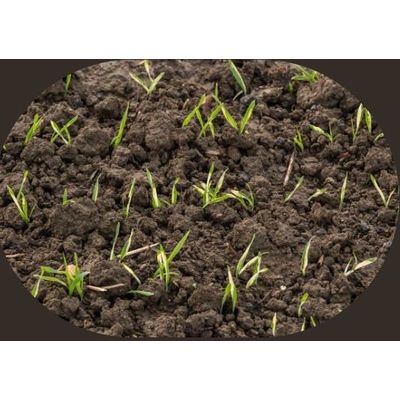
Soil Ecosystem
The soil ecosystem is made from living and nonliving components, and both have an impact on one another and their surroundings. Those organisms and products of their life are natural organic carbon storage. But some land management practices in agriculture have devastating effects on the dynamic balance in soil. They are harming soil microbiome and leading to carbon release. The ways we use soils for agriculture is just as decisive for its constitution as nutrient cycles and biodiversity.
The world’s soil contains 2-3 times more carbon than the atmosphere, which points to the scales that soil plays in mitigating climate change. Regenerative practices such as following a certain crop order, planting cover crops, avoiding tilling and harmful inputs are essential to stop further degradation of our soils. But this won’t be enough. Increasing this storage of carbon by just 0.4% per year in the top 30-40cm of the soil could stop the increase of CO2 in the atmosphere (source).
So on top of remediating the soils for productivity, we should not disregard its potential to reach net carbon zero. In order to ensure long term food security for a constantly growing world population, we need to combat soil degradation and enhance nature’s ability to protect its eco- and climatic systems. Restoring and amplifying the effect of the soil’s microbiome can be achieved by using humic substances. Humic substances serve to enable the uptake of phosphate for better plant growth and nurse microbes that turn carbon dioxide into organic bonded matter in the soil.