


TD - Rotary Dryer
For briquetting, the optimal moisture content of materials should be controlled around 12%. If materials are too wet, please dry them first. Rotary dryer, or rotary drum dryer is widely used in mining, metallurgy, agriculture, fertilizer, building materials industry. The robust yet simple construction combines flexibility with reliability, enabling drum dryer to handle a vast range of materials and to operate continuously at high temperature. It is applicable for powder or granular materials that contain high moisture content, such as coal, sand, mineral powder, ore fines, gypsum, sawdust, wood chips, bagasse, etc.
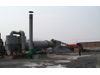
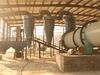
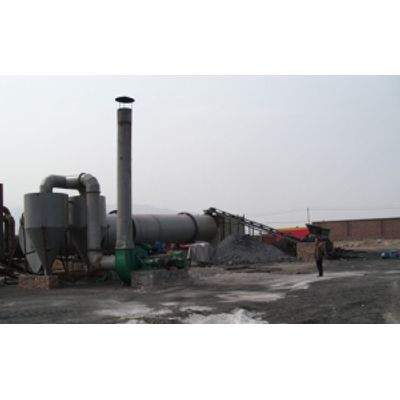
Rotary dryer is mainly composed of rotary cylinder, flights, hood, transmission system, supporting device, sealing device, dust collector, etc. Cylinder is a shell that inclines at a certain degree to the horizontal. Materials are fed into drum dryer at the higher end, and move towards the discharge end by gravity gradually. Many flights are mounted on the inner wall of cylinder to lift materials and shower them. This would promote the heat exchange rate. Hot airflow is brought into direct contact with wet materials, the heating of the material and evaporation of the moisture depends on heat transfer between the hot gas and wet solid. Hot gas removes the evaporated moisture and carries it away from rotary dryer.
Some sticky materials, like gypsum, would stick on the inner wall of cylinder. To avoid this situation, chains are equipped to strike them repeatedly as cylinder is rotating.
There are basically two drying mode, co-current drying and counter-current drying. In co-current rotary dryers, hot air move together with materials at the same direction. In counter-current rotary dryers, hot air travels against the direction of materials. Counter-current dryers are especially applicable for materials that could withstand high temperature and require extremely low moisture content, such as sand.