


- Home
- Companies
- Boris Net Company Limited
- Products
- Boris Nets - Commercial Fishing Nets
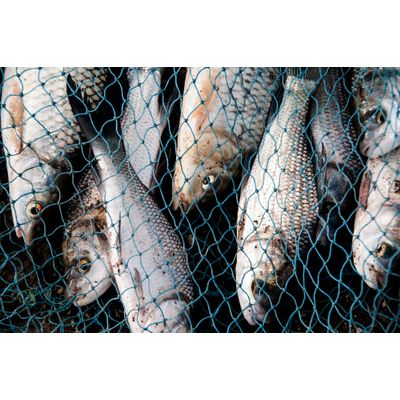
Boris Nets - Commercial Fishing Nets
The grassroots of Boris Nets. The design, innovation and attention to detail that goes into constructing a Boris Net have taken the company from strength to strength. With a history spanning over 60 years of working with many generations of fishing families, Boris Nets built a reputation for quality and excellence. We are busy adding products to this category. Please call with your inquiry. All trawls are still crafted by hand in our Fleetwood factory by our dedicated team with over 100 years collective experience. We now hold in stock a wide range of equipment including buoys, floats and netting along with wet gear and boots. A full range of polysteel rope and pot ropes are also available to serve the growing static gear fisheries. Large quantities of stock allow us to offer prompt delivery with overnight carriage available to many locations throughout the UK.
Boris Nets have been manufacturing Trawls and Seine nets since 1958. In the same year Boris Nets were approached by the MOD to manufacture Seine nets to collect the wreckage from a Victor bomber which crashed into the sea off Milford Haven. The nets for this operation had to be robust and the traditional nets of the time were made out of cotton which was deemed to be too fragile.
Boris was asked to make the nets out of the new ‘Wonder Fibre’ Courlene. Up to this point it was thought that Courlene was too difficult to use in the manufacture of fishing nets. Boris proved them wrong, and now Courlene, trademark of Courtalds (generic name polythene) is used throughout the world!
The fishing boats using Boris Nets managed to collect over 80% of the Victor Bomber, many pieces of which were smaller than 1 inch square.
Boris Nets have pioneered the introduction of many other innovations into the fishing industry such as Pair Trawling with small boats, Box Trawls and V Doors.
Today the company now supplies fishing nets throughout the world. The majority of nets are still ‘hand guarded’ which Boris believes is superior to machine guarding because hand guarding will distort to spread the tension, which can allow for an extended working life.
- Single, Twin and Pair Trawls for Demersal Species
- Single and Pair Trawls for Pelagic Species
- Single and Twin Trawls for Prawn, also Fish & Prawn.
- Boris Nets supply a range of netting, twine, wire and chandlery.
- We carry huge stocks of Polysteel Rope.
Fishing nets are an important instrument in the commercial fishing industry because they allow fishermen to catch vast amounts of fish in a quick and efficient manner. Commercial fishing net production, on the other hand, is a sophisticated and labor-intensive operation involving a wide range of materials and processes. This article will go through the procedures involved in the production of commercial fishing nets, including the materials required, the numerous varieties of fishing nets and their specialised functions, and the various manufacturing methods.
The selection of materials is the initial stage in the production of commercial fishing nets. Synthetic polymers such as polyethylene, polypropylene, and nylon are the most often utilised materials in the production of fishing nets. These materials were chosen for their strength, durability, and resistance to salinity and UV radiation damage. Natural fibres such as cotton, hemp, and flax, as well as metal wire and cordage created from materials such as steel and stainless steel, may also be used in the manufacturing of fishing nets.
In the commercial fishing sector, there are various distinct types of fishing nets, each of which is built for a unique purpose. Drift nets, for example, are long, thin nets that are sent adrift in the ocean to collect pelagic animals like tuna and salmon. Trawl nets, on the other hand, are enormous, conical nets pulled through the water by a vessel to collect bottom-dwelling species like cod and haddock. Gill nets, also known as entangling nets, are vertical panels of netting hanging in water and used to trap fish by entangling them in the netting.
The procedure of knotting the netting is the next stage in the production of commercial fishing nets. This is a time-consuming operation that involves tying knots in the netting to make a sturdy and durable mesh. In the manufacturing of fishing nets, numerous knotting techniques are utilised, including the knotless knot, the gill net knot, and the purse seine knot. The precise knotting technique used will be determined by the sort of fishing net being built as well as the netting’s unique needs, such as mesh size and strength.
After knotting the netting, it must be fastened to a frame or support structure. Depending on the netting’s unique requirements, this can be done with ropes, cords, or wire. The frame or support structure provides the form of the fishing net and allows it to be deployed in the water. The frame or support structure must be sturdy and durable in order to endure the rigours of being utilised in the water.
The netting must be examined and tested once it has been knotted and affixed to a frame or support structure to ensure that it satisfies the appropriate criteria. This may include evaluating the netting’s strength and longevity, as well as looking for any faults or vulnerabilities. If the netting passes the inspection and testing process, it is ready for use in commercial fishing.
To summarise, the production of commercial fishing nets is a complicated and labor-intensive process that includes material selection, netting knotting, and netting connection to a frame or support structure.