





Dear Deer - Model AJ-102 -Twin Irrigation Sprinkler Hose
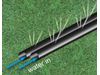
AJ-102 DEAR DEER Twin Irrigation Sprinkler Hose is the type of most stable sprinkler hose. It is best designed to overcome the problem of spraying aside of the single sprinkler hose. Saves a lot of labor cost to patrol in the field to find side sprays and turn the hoses. A sprinkler hose is a flat hose with many pores on the hose to spray water mistily, also named as rain pipe, rain tape, micro spray tube and so on. Sprinkler hose irrigation system easy to install, easy to maintain, low cost, easy plug clearing, quick irrigation, and low water pressure, low energy consumption. When laid on the ground, water is sprayed upwards.
- At first, a sprinkler hose is a simple single flat hose. When filled with water, the flat hose expands into a cylindrical, that makes the hose body easy to turn aside, so that the sprays from pores are turned aside, the water falls down at the wrong areas too. Far away from the areas we want to irrigate. Therefore, when water is spraying, we must patrol in the field to find side sprays and turn the hose, letting the sprays back in the correct direction. This is tiresome work, wasting a lot of labor cost and makes us wet all over. AJ-102 DEAR DEER Twin Sprinkler Hose is 2 hoses with pores and linking together. The trends of 2 hoses limited each other. That makes it very stable, and keeps water spraying in the right direction. Sprinkler hose irrigation system is suitable for any dry land crops. There are different types of hose, different watering pore pattern, for different crops and different farmlands. Can be used to open farmland, sandy land, greenhouses, net house etc. Especially it is suitable for crop nursery or the plants require more water in short time. The use life of sprinkler hose is about 2-5 years, depending on how to use and how to maintain.
- Irrigation sprinkler hose is a tape like flat garden hose. This flat garden hose have many tiny pores on the flat hose wall. It is a micro irrigation system, with water which sprayed mistier than any sprinklers. Sprinkler hose is also said as sprinkler tape, rain tape, rain pipe, rain hose, micro spray tube, micro spray hose, soaker hose, kansui tube, selang irigasi etc. It irrigates gently, just like natural light rain. You can easily install several sprinkler hoses with T fittings, rigid pipes or flexible pipes and control valve as a farm irrigation system which easy to be maintained, cost-efficient, easy clog elimination, short irrigation time, low irrigation pressure, low energy consumption. It is useful for field irrigation of crops in dry farmland.
- There are different ways to irrigate different type of farming such as open field, greenhouse or net house etc. This flat hose is especially useful for the plants which need to be watering in a short time.
- The useful lifetime of sprinkler hose is around 2 to 5 years depended on situation how your use it. Our sprinkler hose branded "DEAR DEER" is famous with high reputation in China, South East Asia and Taiwan. And now our "DEAR DEER" products are continually expanding to more and more countries around world.
Micro-irrigation, also called localised irrigation, low volume irrigation, low-flow irrigation, or trickle irrigation is an irrigation method with lower pressure and flow than a traditional sprinkler system. Low volume irrigation is used in agriculture for row crops, orchards, and vineyards. It is also used in horticulture in wholesale nurseries, in landscaping for civic, commercial, and private landscapes and gardens, and in the science and practice of restoration ecology and environmental remediation.
Description
There are several types of micro-irrigation systems. Many of the components are the same for all of these types of systems. Most systems typically include filters, pipes, valves, and tubing. The main difference is in the type of emission device that is used to deliver the water to the plants. Drip irrigation utilizes drip emitters that deliver water at very low rates. The typical range is 0.2 to 4.0 gallons per hour. In some systems, the emitters are installed manually on the outside of the tubing and placed where needed. Other systems might use integral dripper line or drip tape with the emitters already installed at a predetermined spacing. Micro-sprinklers, which can include fixed stream sprays and rotating spinners typically deliver water at a higher rate, such as 10 to 25 gallons per hour and will cover a larger area than drip emitters. These are more typically used in tree orchards where the plants are larger. The goal is to distribute water slowly in small volumes and target it to plants` root zones with less runoff or overspray than landscape and garden conventional spray and rotary sprinklers. The low volume allows the water to penetrate and be absorbed into slow-percolation soils, such as clay, minimizing water runoff.
System components
There are a wide variety of system components included in a micro-irrigation systems. Most systems include a filter. These may include pre-filters, sand separators, media filters, screen filters, and disc filters. The level of filtration required depends on the size of the emission device and the quality of the water source. A pressure regulator or regulating valve may be required to reduce the system pressure to the desired level. Automatic or manually operated valves will be required to switch from one irrigated section to another. An irrigation controller will be used with automatic systems and may also be needed for back flushing the filter or sand separator. Since water conservation is a frequent reason for choosing micro-irrigation systems, soil moisture sensors, rain shutoff sensors, and sometimes even weather stations may be installed.
Emission devices
Microtubing
Microtubing is one of the oldest types of drip irrigation devices and was used in greenhouses in the 1970s. It consists of a very small diameter tubing. Flow is regulated purely by the length and diameter of the tubing. Weights or stakes are sometimes attached to the end of the tubing to keep it in place.
Fixed flow drip emitters
Low-flow irrigation systems in gardens using drip apply water through two methods:
pre installed small holes in small diameter tubes placed on or below the surface or
self cleaning emitters, in different precipitation rates, pre installed or contractor installed for different rate emitters on same supply line (i.e. trees-higher, perennials-lower). The Flexible supply pipe can be buried either underground or pinned on the surface and buried under
Low volume irrigation systems often use the two delivery components of drip systems to apply water through small holes in small diameter tubes placed on or below the surface of the field. This is done instead of agricultural surface irrigation and furrow irrigation for vegetables, fruits and berries, and other high-value crops.
Adjustable drip emitters
Trickle emitters, also called `spider sprays,` come in fixed or adjustable radius shapes and diameters, and are installed directly on the flexible supply pipe or on tubing connected to it, and mounted on small stakes. Trickle emitter-`Spider sprays` work well for plants with more fibrous root systems, tree and large shrub basins, and in pots and container gardens - allowing automated watering of plants on decks and patios. Mist emitters can also be used in pot, both on the ground and hanging, with humidity-fog watering for epiphytes and ferns replicating habitats.
In the Horticulture industry, wholesale growers and plant nurseries often use the trickle emitters for 5-US-gallon (19 L) and larger container stock, to automate watering. Attached to longer supply tubing on short stakes, they are easily movable to new containers when stock is moved or sold. Mist emitters are used for propagation, epiphytes, and other plants needing higher humidity.
Micro-sprinklers
Low volume micro-sprinklers may be attached to hard plastic risers or attached to standard sprinkler heads, but are more typically mounted on stakes and attached to small diameter micro-tubing connected to polyethylene tubing with a barbed connector. Some micro-sprinklers have a fixed spray or stream pattern, while others rotate. These are installed above ground and are often used for fruit and nut orchards and vineyards. These systems are expensive, even for large-scale agricultural use, and are predominantly used for high-value crops.
Macro-Drip irrigation
High-volume, low-pressure irrigation systems for container gardening are known as Macro-Drip. A pressure regulator lowers the water pressure to under 30 pounds per square inch while a relatively large diameter hose or pipe delivers the water directly to a sprinkler head.[1] This allows a larger volume of water to reach the flowerpot in a short amount of time, which will then be absorbed into the roots of the plant.
Sprinkler
Sprinkler Irrigation[2] is the process of providing water to your land. This process works with the number of pipes. It is then partitioned with the help of Sprinklers that spreads the water all over in an equal balance. One can gain optimum solutions by installing sprinkler Irrigation. Sprinkler Irrigation helps in decreasing the labor cost saves upto 20% - 40% water supply. It can be applied to any soil that helps to increase crop production. There are a wide variety of sprinklers available in the market. One can choose carefully from the best of sprinkler systems.
Ecological restoration and phytoremediation projects
Low-flow irrigation systems are used on some native plant habitat restoration and environmental remediation projects. The lower operating pressure can be the only choice for remote locations with wells or small storage tank water sources. It is used in temporary installations during initial establishment periods, and being on the soil surface easily removable with minimal damage to the recovering plant community. An example is its use in riparian zone restoration, and environmental remediation projects using Phytoremediation and Bioremediation techniques.
Water conservation and regulations
As municipal and agricultural water supplies become more limited; through increased population demands, droughts, and climate change; city, water district, and state-province level regulations and codes are beginning to encourage, offer rebates with use, or mandate significantly reduced water allowances, at higher costs, that are bringing many water conservation products and techniques both to the forefront and more competitively matched to traditional irrigation system costs.
Use of micro-irrigation systems on green building candidate projects can help them to accumulate points for LEED - (Leadership in Energy and Environmental Design) certification rating and awards.
See also
- Deficit irrigation
- Drip irrigation
- Irrigation in viticulture
- Groundwater recharge
- Water conservation
References
- Garden Time TV (2019-04-26), Daisy Rain Garden System, retrieved 2019-04-29
- "How do Sprinkler Irrigation Systems Work? | Automat Industries". Automat Irrigation Blog. 2019-08-06. Retrieved 2019-09-18.
- This article incorporates public domain material from the Congressional Research Service document "Report for Congress: Agriculture: A Glossary of Terms, Programs, and Laws, 2005 Edition" by Jasper Womach.
- External links
- DWP-Be Water wise blog: "The Garden Spot"
- Categories: Irrigation Low-flow irrigation systems Water conservation Sustainable agriculture Sustainable gardening
What is the best pipe for irrigation system?
Our irrigation sprinkler hose is one of best pipes for irrigation.
How does a lawn irrigation system work?
Use our irrigation sprinkler hose can irrigate garden or lawn well.
How much is irrigation pipe?
Sprinkler hose irrigation is an excellent choice of low cost.
How do you connect PVC to sprinklers?
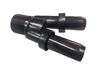
Our irrigation sprinkler hose has many fittings to connect PVC pipe.
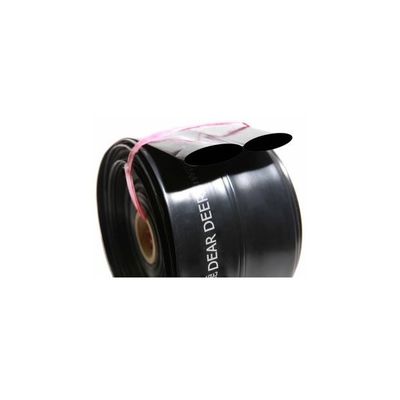
DEAR DEER AJ-102 twin irrigation sprinkler hose were with only 1 size(6`*2) of it.: two irrigation sprinkler hoses of width 50mm run together. The main advantage of the twin sprinkler hose is that it spray the water with very steady direction when it is sprinkling (it can keep water spray direction steady without the effect of stress twist during water spraying). It saves a lot of labor cost to patrol in the field to find side sprays and turn the hoses.
Micro-irrigation, also called localised irrigation, low volume irrigation, low-flow irrigation, or trickle irrigation is an irrigation method with lower pressure and flow than a traditional sprinkler system. Low volume irrigation is used in agriculture for row crops, orchards, and vineyards. It is also used in horticulture in wholesale nurseries, in landscaping for civic, commercial, and private landscapes and gardens, and in the science and practice of restoration ecology and environmental remediation.
Two perforated hoses go along together to keep perforations spray not turn aside.
- Size: 1 1/4”
- Each hose folded width: 50 mm *2
- Length: 100 m
- ISO9001:2015 certification, TÜV Rheinland certification, Dun & Bradstreet certification