


- Home
- Companies
- GD Waldner India Pvt. Ltd.
- Products
- GD Waldner - Precise Filling Systems
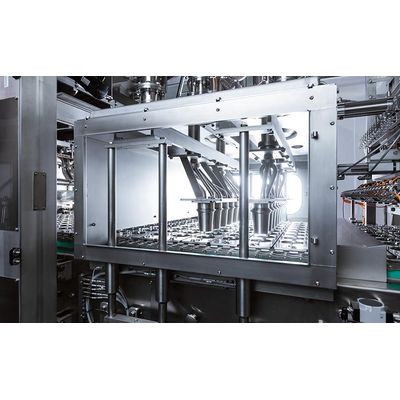
GD Waldner - Precise Filling Systems
Reliably filling products with different consistencies requires precise filling systems with state-of-the-art filling technology. These systems ensure that liquids, powders, pastes or piecemeal products are perfectly portioned and efficiently filled into cups, glass jars, bottles, tubs, tubes or pouches.
A filling system can only guarantee accurate filling of large product batches if it meets the requirements of the respective product. From food and pet food to cosmetics and pharmaceuticals – your intended uses define the qualities of your tailored Waldner filling machine. You determine the specific capacities of your filling machine.
Unique products call for tailored solutions: that’s why the size, technical equipment and operation of our filling systems can be adapted with utmost flexibility. Waldner filling machines are configured to suit the filling substance and container down to the smallest detail and equipped with cutting-edge filling technology to enable precise, efficient filling – while complying with the most stringent hygiene standards at all times, of course.
Regardless of whether you need a filling system for small quantities or for large batches, a filling machine for liquids, powders or pastes, a semi-automatic or fully automatic filling system – we will equip your system with all your desired functions, which can be individually monitored and controlled.
Different filling sizes with electronic weight adjustment, hot sealing, sleeve lids and a large buffer of cups – learn more about the filling of delicatessen salads in our case study.
Yoghurt, cream cheese, fruit jams, minced meat, delicatessen specialities – filling systems have a wide range of applications in the food industry. But not every filling machine is equally suitable for every product: filling fruit syrup into bottles, for example, requires different filling mechanisms than those used for portioning potato salad into cups.
The consistency of the filling substance and the container to be filled (e.g. cup, bottle or pouch) are the two main factors for the individual configuration of your filling system. In the food sector, there are also special hygiene regulations that must be complied with to avoid germs and contamination. Packaging sterilisation processes for impeccable food hygiene are therefore standard in our systems.
Filling machines for pet food
Have you already crafted the perfect recipe for your pet food and now just need to find the right machine for filling? Then the pet food filling machines from Waldner are just what you’ve been looking for. Our systems can be individually adjusted to the different consistencies of wet and dry food, enabling even and hygienic filling into cans, bowls and pouches.
A stand-out solution is our pouch filling system for pet food, which can fill up to 30,000 pouches per hour with accuracy down to the gram. Thanks to the optional two-phase filling system, it’s even possible to precisely dose pet food of differing consistencies (e.g. pieces and gravy) in one pouch – and in line with the highest hygienic standards.
The cosmetics sector typically sees liquid, powdery or paste products that need to be filled into a variety of packaging. One challenge here is that a single product must often be filled into different containers. Whether it’s jars and tubes of crème or different sizes of shampoo bottle – a filling system for cosmetics needs to be able to handle anything.
Cosmetic products are constantly changing, and several products are often processed by a single machine. It is therefore vital that the filling machines can be thoroughly cleaned. This avoids undesired residues and guarantees uncontaminated products.
When chemicals such as cleaning agents, laundry detergents, pesticides or fertilisers are processed in a filling system, there are two challenges: for one thing, large packaging formats are often used such as large bottles, tubs, canisters and sometimes even barrels. This presents a logistical challenge for the filling system.
For another thing, the dosing and filling method must take the respective chemicals into account, since they often need to be filled extremely gently and accurately down to the millimetre or gram. Furthermore, the safety of the production employees must be guaranteed when dangerous chemicals are filled.