


- Home
- Companies
- Penergetic Canada
- Products
- Penergetic - Model G - Slurry Activator
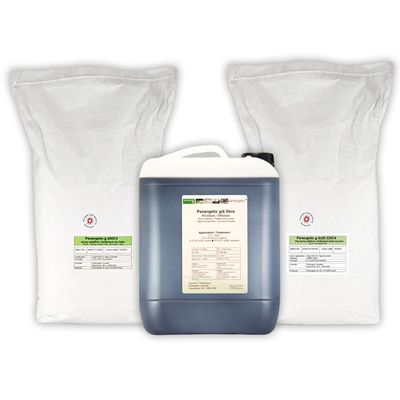
Penergetic - Model G -Slurry Activator
“Converting a problematic waste product into a valuable organic fertilizer.” Suitable for dairy, hog, other livestock liquid manure, penergetic g acts as a catalyst to naturally create an aerobic condition in the slurry, activating beneficial microbes which transform the slurry into a nutrient rich organic fertilizer – which is far more beneficial than the more commonly occurring and problematic untreated (anaerobic) manure or slurry. Penergetic g is an economical, easy to apply manure treatment method (requiring no capital equipment) used by thousands of dairy farms in Europe, globally (and now popular in North America).
- Eliminates unpleasant ammonia and sulphur odors
- Controls crust and/or sediment layer formation
- Causes slurry to become homogenous
- Addresses insects and manure-borne pathogens
- Better for soil and crops while protecting groundwater
Shock Treatment of Manure Pits and Lagoons
When first starting on the Penergetic products it is important to apply an initial one-time shock to the existing manure/sludge/slurry that is currently in the pit or lagoon. The suggestion is to use 1.5 to 2 kg per 100 m3 (25,000 gallons) of volume present depending on severity or thickness of sludge. Preferred method is to mix powder in water and apply directly into the liquid portion of the manure.
*Product will not work if poured on top of a crust.
Example: Example: 800 m3 (200,000 gallons) of existing volume to treat: 200,000 / 25,000 = 8 x (1.5 to 2.0 kg) or 12 to 16 kg. for initial shock treatment.
Weekly or Bi-Weekly application rates (based on animal numbers or volume)
Dairy: Suggested application rate is to apply 5 grams of product per week for full size dairy cows.
Example: 200 cows = 5 X 200 = 1.0 kg per week. If producer prefers to apply every 2 weeks then apply 2 kg every 2 weeks for 200 cows.
Swine: Depending on operation set-up, add penergetic g to underground pit based on LSUs or volume of manure generated. In cases where in-barn pits emptied at regular intervals – say, monthly, half yearly or annually, can match application rate and intervals accordingly
Example: Suggested application rate is to apply 200 grams of product for every 100 sows per week, or 8 kg of product per 400 m3 (100,000 gallons) of manure produced. Alternatively, see (Sample) Swine Manure Treatment Protocol PDF which follows in Information Download section.
** Contact distributor for details on LSU equivalents
e.g.: a cow = 1 LSU; heifer = 0.7 LSU; sow = 0.4 LSU; wieners up to 50 lbs. = 0.06 LSU, feeders: 7 = 1 LSU, etc.
**Accelerated Rate is suggested for severe situations: e.g. 2x rate for the first 12 to 15 weeks of use.
a. In barn alleys or effluent channels without a floating layer
Mix penergetic g with plenty of water in a watering can and pour evenly over the channel or through slatted flooring. Best results may be achieved by pouring 2/3rds of the recommended dosage at the head of the channel. In barns with automatic alley scrappers, the scrappers will carry the penergetic g/water mix out with the slurry to the pit or tank.
b. In pits or effluent channels with a crust layer
Poke some holes through the crust layer (or move the crust layer aside) and pour the mixture of penergetic g and water through these holes into the liquid layer of the slurry under the crust.
c. In a slurry tank or lagoon
For best results at the outset, pour the penergetic g/water mixture over the agitator while operational. If no agitator is available, puncture any crust layer present with a suction hose and introduce the penergetic g/water mixture through the hose. Pump sufficient slurry out of the tank or lagoon to fill the suction tank then pump it back into the slurry tank/lagoon. The idea is the get the penergetic g / water mixture integrated into the slurry as much as possible at the outset so as to ensure good results more quickly. In the case of large slurry tanks or lagoons, especially if a thick crust is present at the outset (dairy) or heavy sediment layer (hog), this procedure should be repeated at several locations around the structure.
d. In underground pits and stall cleanout channels
Mix penergetic g with plenty of water in a watering can and pour it evenly over the empty pit or channel. Repeat this procedure each time the channel or pit is drained.
e. Maintenance application
On an on-going basis, to treat manure that continues to be generated, penergetic g mixed with plenty of water is applied through the slatted flooring or into the manure alleys in the barn. This maintenance application should be carried out regularly, usually weekly, but at least every 14 days.
- Suitable for organic farming (OMRI listed)
** Results may vary for different crops, soil types and farms. **
Note: Demonstration studies and commercial use by farmers have shown that optimal results are achieved when only a small quantity of Penergetic p is used and the quantity of fertilizer applied is reduced. Furthermore, the use of other farm chemicals may also be reduced.
- Optimizes slurry and liquid manure
- Stimulates the more complete breakdown of slurry by decomposition/rotting (aerobic process), instead of the more common and less desirable putrefaction & decay (anaerobic process)
- Overcomes the emission of malodorous gases, including hydrogen sulphide, ammonia & (odourless) methane gas
- Activates the conversion of ammonia to ammonium (a valuable plant nutrient) resulting in less loss of nitrogen through volatilization (gassing off)
- Mitigates blocked effluent channels and pits and stops crust formation and bottom sedimentation layers
- Produces a homogeneous and free flowing slurry
- Lessens or eliminates the need for agitation of stored slurry
- For barns with sand bedding, prevents manure solids from sticking to sand so lagoon retains more storage capacity and more nutrients available for field application
- Overcomes problem of foaming, including when pumping out
- Higher available nutrient value permits requirements for synthetic fertilizer and farm chemicals to be reduced
- Reduces causticity for better compatibility with plants and soil microbes
- Reduces the occurrence of harmful insect and insect larvae
- Limits probability of pathogenic organisms in slurry
- Stabilizes manure nutrients resulting in a reduced risk of nutrients leaching into water resources
- Optimizes manuring effect which activates the soil and contributes to plant nourishment
- Creates a valuable organic fertilizer that delivers more balanced nutrients to plants and soil
- No chemical ingredients, no capital investment and energy consumption reduced
- Environmentally friendly and ecologically balanced (OMRI listed)