


Steinsvik - Thermolicer Fish Lice Treatment Machine
Sea lice are currently the biggest challenge for fish farmers in most salmon producing areas. We at Steinsvik intend to be a part of the solution. We have since 2007 been developing a chemical and drug free treatment system. The Thermolicer is now commercially available and has already been put to use by a number of our customers.
The lice have a low level of tolerance for sudden changes in temperature. This fact is exploited by the Thermolicer where the fish are bathed briefly in lukewarm water. The lice die and fall off the fish, after which they are collected and destroyed.
The machine
The Thermolicer is a machine for commercial scale dip or bath treatment of fish. A sudden rise in water temperature is a well-known method of killing lice. We have developed a machine that does this on a commercial scale.
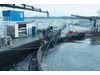
The fish are crowded and pumped into the machine where it passes through the processing loop in 25–30 seconds. Treatment water holds 30–34 degrees depending on ambient sea temperature. The treatment water is filtered, aerated, oxygenated and reused in the system. This simple and environmentally friendly treatment has an effect that goes beyond the expected in traditional treatment agents like chemicals and medicines.
- Fish enters Thermolicer after pumping.
- Water separation.
- Sea water is filtered and released.
- The fish is exposed to lukewarm water.
- Treatment loop.
- Water surface.
- Water separator for treatment water.
- Fish exits the system.
- Heated water is circulated to water tank for filtration, aeration and reheating.
- Treatment water is pumped back to the treatment loop.
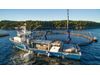
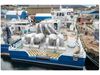
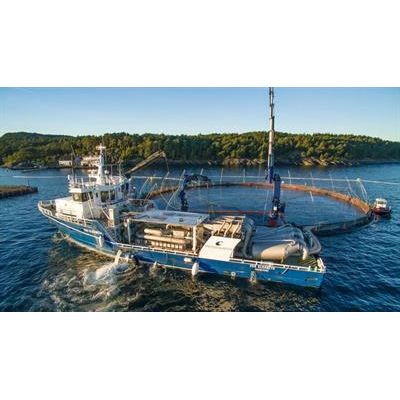
The Thermolicer is fitted on a boat or a barge and each machine can treat up to 80 tons per hour, depending on crowding and local conditions. The fish are crowded and pumped through the Thermolicer and then back in the same cage or to an empty cage. Together with the Thermolicer you get training and recommendations to ensure that you can treat your fish whenever needed, and not be dependent on a third party to perform any tasks.