

Rhodomonas
Rhodomonas Culture for Feeding Oysters and Other Aquatic Animals
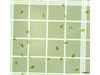
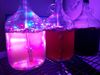
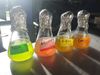
If you ever came across a beautiful reddish (and pink, in my opinion) coloured algae, it may have been Rhodomonas. This strain of algae, one of our favourites, can be an excellent choice for feeding oysters, fish, and invertebrates during their early life stages, thanks to its nutritional content and sustained growth.
Why is the Size of Rhodomonas Essential?
Rhodomonas algae have medium cell sizes, which makes them an ideal food source for older oyster larvae. The cells are well-suited to the small filtering apparatus of young oysters, enabling them to capture and consume algae efficiently.
What is their Nutritional Content?
Rhodomonas is very rich in essential nutrients such as proteins, lipids, carbohydrates, and vitamins, which are crucial for the growth and development of older oyster larvae. These nutrients support their metabolism and provide the energy needed for their rapid growth stages.
What are the Benefits of feeding Oysters with Rhodomonas?
When older oyster larvae are provided with a nutritious food source like Rhodomonas, they can achieve higher survival rates, faster growth, and healthier overall development. This is especially important during the critical larval stages (ie. setting) when oysters are most vulnerable to environmental changes and stressors.
How to cultivate Rhodomonas?
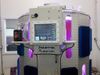
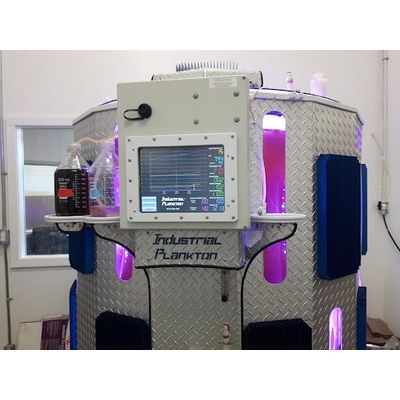
Rhodomonas is a very sensitive algae, but it grows well in Industrial Plankton photobioreactors under proper conditions. The successful cultivation of Rhodomonas in bioreactors requires attention to several key factors to ensure consistent and reliable growth:
- Temperature
- Light
- Nutrientns
- Mixing and Aeration
- pH Control
Maintaining a balance and complete control over these factors is essential for a thriving culture and for securing a good food source to support healthy livestock. As such, Industrial plankton bioreactors achieve a flourishing culture by ensuring complete control over:
- Temperature
Rhodomonas algae prefer specific temperature ranges for optimal growth. Our bioreactor has built-in temperature control to maintain the desired temperature for your strain and promote healthy growth without stressing the algae. We also offer a high-temperature option if your facility is not temperature-controlled.
- Light
Like all algae, Rhodomonas requires sufficient light for photosynthesis, which is essential for its growth. Our bioreactors are equipped with LEDs that provide the necessary intensity and spectral range for optimal photosynthesis.
- Nutrients
Rhodomonas requires a balanced supply of nutrients, including nitrogen, phosphorus, and micronutrients, for robust growth. These nutrients can be provided through a culture medium that is regularly replenished or through continuous nutrient feeding. For a deeper dive into nutrients, check out this Nutrient article.
- Mixing and Aeration
Proper mixing and aeration of the culture medium in the bioreactor are essential to ensure uniform distribution of nutrients and gases and to prevent the settling of algae cells.
- pH Control
Algae growth can be inhibited or promoted based on the pH of the culture medium. As such, maintaining a stable pH level is crucial for Rhodomonas cultivation. We usually recommend culturing Rhodomonas at pH 7.9 (exceptions may apply depending on your strain). Our bioreactors automatically monitor and maintain the pH at your desired level so that you can take pH monitoring off your mind.
To learn more about algae growth and pH, check out the CO2 and pH article here.
All of these factors will secure a thriving culture, as long as you start with a clean inoculum. Inoculating with a clean inoculum will set your algae up for success. If you are using one of the Industrial Plankton Biorreactors, we recommend inoculating with a 20 L carboy of biosecure clean algae. Explore algae production equipment here.
If you require further assistance, the Industrial Planton's skilled staff can guide you on best practices for inoculum generation through to the final harvest here.