

Industrial Plankton Inc. articles
How to Inoculate Industrial Plankton Algae Photobioreactor (PBR)?
The inoculation process with Industrial Plankton photobioreactor (PBR) systems is designed to be easy and user-friendly. Before starting, you will need to:
- Sterilizing the tank using the cleaning cycle and the CIP system (Clean-in-Place) is now complete.
- We recommend having 200 L of water in the tank already. This water would be added after the CIP.
One of the most essenti
Industrial Plankton Inc.
What are open and closed algae culture systems?
Open algae culture systems and closed photobioreactors (PBRs) are the two broadest methods for culturing microalgae at medium to large scale, and the advantages and disadvantages depend on your microalgae cultivation goals. A PBR is any device or system that supports the culture of photosynthetic organisms using light.
In any type of algae production, light penetration, light path and surface area to volume ratio all affec
Industrial Plankton Inc.
Have you ever wondered about the handling time per trillion of cells produced and energy efficiency of Industrial Plankton PBRs?
We are fortunate one of our clients, Nova Harvest, shared their data with us that was part of a bigger project they were involved with. In this document, Unlocking Efficient Algae Production, be sure to check out the tables on page 3 and 4 of the attachment. They compare traditional methods of algae culture they were using, Industrial Plankton’s or
The Drive Towards Scalable and Efficient Algae Production
Producing algae as a commodity for feed, pharmaceuticals, nutraceuticals, carotenoids, and pigments calls for expansive setups. Executing this production at scale and making this economical, vast installations like raceway ponds or extensive tubular systems are required. However, the efficiency of these systems hinges on a critical factor: the inoculum/pre-culture of uncontaminated, high-quality algae to kicks
Rhodomonas Culture for Feeding Oysters and Other Aquatic Animals
If you ever came across a beautiful reddish (and pink, in my opinion) coloured algae, it may have been Rhodomonas. This strain of algae, one of our favourites, can be an excellent choice for feeding oysters, fish, and invertebrates during their early life stages, thanks to its nutritional content and sustained growth.
Why is the Size of Rhodomonas Essential?
Rhodomonas alg

‘Kelp’ Us Learn: Seaweed Reproduction and Hatcheries
Credit for this content and appreciation for allowing us to repost goes to the Maine Aquaculture Innovation Center. This video is a part of their seaweed education curriculum for Maine students. Learn more about their program here.
Also special thanks to The University Of Maine’s Aquaculture Resea
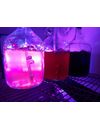
Microalgae Growth: Light Intensity
Microalgae growth tends to have a consistent relationship with light intensity. Even though light is a key ingredient in photosynthesis, it does not necessarily mean that more light will always yield greater productivity. In the illustrated graph (Fig. 1), the actual growth rates and intensities at different points along the blue curve vary with many factors, but the general shape remains consistent.
At low light intensities, alg
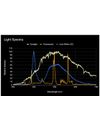
How Important is the Light Spectrum in Microalgae Growth?
Microalgae need light to grow and photosynthesize, but not all light is created equal. The spectrum of light can significantly affect how well your algae grows.
The spectrum of a light is how bright it is at different wavelengths. This can be closely related to colour; e.g., a red LED appears red because it emits light at 650 nm. However, differences in light spectra can also b

Growing microalgae can seem complicated because there are so many factors that need to be just right for a successful algae culture. In this article we are going to briefly explain some of these factors and why they are important.
Microalgae are an evolutionarily diverse group of organisms that come in many colours and shapes. They are united by their small size (1 – 100 µm for single cells, larger for colonies) and their ability to photosynt
De-risk the Scale-up Process
While growing thriving algae in a lab, it seems easy to replicate our cultures at a bench scale while maintaining biosecurity protocols. The problems emerged only when we wanted to carry out our results in the laboratory on a commercial or industrial scale. At this moment, maintaining your culture parameters becomes a challenge.
How to De-risk the Scale-up Process?
Knowing exactly which parameters are required for t